Heresy is a term used either too much or too little in Christian circles. Either Christians call everything they disagree with a heresy, or they are so afraid of offended or exclusing someone that they are unwilling to employ it even when its appropriate.
I think that some of the problem with our misuse of the term heresy comes from an misunderstanding of what heresy is. The word heresy comes from the word for "faction" or "party." Heresies are parties within the church that make one doctrine or one perspective on a doctrine the centerpiece of the faith to the exclusion of the rest. Thus, heresy is not exactly the opposite of orthodoxy ("right teaching"), but is more precisely the opposite of catholic ("universal, complete"). Accordingly, heresy is best defined as substituting part of the truth for the whole. This is why heretics are not completely wrong and often have much truth to share. The problem with heresy is not its utter falsity, but its one-sidenesses.
How might this change our attitude toward heresy? Heresies are not extra-Christian viruses to be eradicated, but intra-Christian parasites that feed off the truth. The solution to heresy is not to push it out, but to draw its one perspective back into the whole truth of the Christian faith. In other words, heresy is to be redeemed.
Let me give an example.
In the 5th century, a certain party called the monophysites claimed that Christ had only one nature: the divinity of Christ subsumed his humanity so that the humanity was rendered divine. This heresy witnessed to the truth that Christ was not a schizophrenic half-man/half-God, but one single person, the Son of God become man. Unfortunately, they did so at the expense of the complete humanity of Christ.
Simultaneously, there was another party who bore the brand name of Nestorians who claimed that within Christ there were really two persons: the divine son of God and the human son of Mary. This heresy witnessed to the truth that both the divinity and humanity of Christ were complete and unaltered. Unfortunately, they did so at the expense of the integrity of Jesus Christ as one single person.
At the council of Chalcedon (451), the church affirmed the truth on both sides of the argument: Christ is one person with two natures. The heresies were not so much rejected as assimilated into a larger whole. The truth on both sides was affirmed, while the error was left behind. In other words, these heresies were redeemed.
Any thoughts?
How does viewing heresy this way help us to approach views other than our own?
Do you have any other examples of heresy being redeemed?
Are there any heresies that come to mind that seem "unredeemable"?
How do we practice the art of redeeming heresy without becoming misled ourselves?
Wednesday, August 16, 2006

Wednesday, August 09, 2006
What Wesleyans Can Learn from Karl Barth (Part Three): Theological Ethics
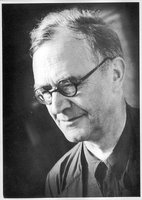

And now for our third installment of "What Wesleyans Can Learn from Karl Barth."
We have learned that Wesleyans can take a cue from Karl Barth in matters of theological authority and in doctrinal procedure. But the significance of Karl Barth is not limited to these theoretical matters alone. Barth is also a beneficial guide for the practical world of Christian living.
Wesleyans are known for their concern for ethics. We have a strong heritage of ethical action, both personal and social. Our distinctive doctrine itself has an ethical thrust. To be sanctified is to be empowered for obedience to Christ by his Holy Spirit. Wesleyans don't need any help caring about ethics.
And yet Wesleyans face the same challenges as every other Christian in the modern and post-modern world: How do we know what is right? How do we determine best way forward? How shall we then live? Wesleyans certainly know that we should pursue righteousness; but how do find the path of righteousness?
A pre-modern Christian might simply say, "I do what the Bible says." Wesleyans have always known that although this approach testifies to the authority of Scripture over our lives, it is still too simple. The Bible does not address every possible situation. Christians must make decisions and develop ends that guide us through the complexities of our concrete lives. In the midst of this hermeneutical struggle, Wesleyans have far too often been enticed by the sense of security provided non-theological foundations for ethical decision-making. Whether it be classical forms of Plato or Aristotle, the modern calculations of Kant or Mill or Marx, or contemporary contextualism or pragmatism, Wesleyans have often been quick to ground their ethical decisions on some external structure. Our motivations have remained distinctively Christian, but our mode of ethical deciding and acting has been guided by seemingly brighter lights.
So who can lead us out of this valley of confusion? How can we learn to decide and act in a distinctively Christian way? Enter Karl Barth. In his unfinished life-work, the Church Dogmatics, Barth did the unthinkable: he concluded each volume with a part-volume on ethics. Now this was not simply to make an already impossibly long work even longer. The purpose was to render ethics an explicitly theological task. Just this structural decision alone is commendable: Christian ethics not an independent discipline with its own ground but rather flows directly from the word and work of God reflected upon by theology. This may seem obvious to those of us living in the wake of the 50-year development of theological ethics since Barth. But in Barth's day this was a radical approach. And despite the proliferation of theological ethicists, it remains a radical reminder of the distinctively Christian core of ethics.
The material benefits of this structural move are even more crucial. Barth discusses all the classic and contemporary "issues" from a center in Jesus Christ. The contours of each issue are shaped by the character of God revealed in Jesus Christ. All human action is under the Lordship of God's action in Jesus Christ. Any good that is done (whether explicitly or implicitly related to Jesus) is a witness to Christ's act of reconciling God and humanity. The basis of determining the rightness or goodness of an action is its alignment (or "correspondence") with the action of God. Accordingly, Barth can take unique views on issues ranging from abortion to war to economics that are seldom found held by the same person. How is able to keep this all in tension? By moving out from Jesus Christ to human action as a witness to him, rather than being guided by some non-theological foundation or partisan ideology.
What does Barth's radically theological approach to ethics have to say to Wesleyans? The first lesson is a negative one: we ought to repent of our unhealthy reliance on non-theological foundations. Like the Ephesian Church in the Book of Revelation, we have forsaken our first love. Although we should not burry our heads in the sand, we must certainly avoid using these external frameworks as a ground for our ethics. Jesus is Lord. Neither Plato nor Aristotle, Kant nor Mill, Left nor Right have lordship over us. We ought to be in constant conversation with these traditions, but they must never supplant Jesus as the Church's one foundation.
But the lessons from Barth are not wholly negative. We can take a positive cue from his work by developing explicit connections between doctrine and ethics. The doctrine of sanctification has only done half of its job if it merely informs us of the spiritual power that enables us to perform the duties we know by other means. We ought to be asking about the implications of a sanctifying God for concrete ethical issues. Rather than taking for granted what God desires in an individual case, we should think through from the beginning what sanctification looks like for the people involved in the situation at hand. These are the kinds of questions that guide ethics down an genuinely theological path.
Finally, Barth's bold structural move to include ethics within dogmatics raises a question about Wesleyan theological education. In my ministerial training, the two courses that seemed to have the least to do with each other where "Ethics" and "Theology of Holiness." It is telling of their separation that the former bore the registration category PHL, while the latter was designated REL. And the foundational status of Ethics was revealed by it being placed before Theology of Holiness in the recommended sequence of courses. Finally, the difference in content was striking, as anyone who had read Wesley and Kant on the same day can testify. The two courses were simply not aimed at the same student. One taught us how to reason through moral problems; the other formed us in a tradition that testified to the power of the Holy Spirit in our lives. If Wesleyan ministers are going to not only profess holiness but live it out, there must be a more conscious connection between these two courses. What would this look like? It may be addressed simply by the Ethics and Holiness professors having a conversation about how these course form students. It may require more complex curricular solutions regarding designation, loading, and sequence. But whatever it looks like, the divorce between theology and ethics in Wesleyan institutions should be addressed.
So that’s the third reason why this Wesleyan has taken an interest in Karl Barth.
Any thoughts?
- What examples can you think of where Wesleyans having been enticed into drawing ethical reasoning from somewhere other than our Christian core?
- What specific ethical issues are illumined by a Christocentric starting point?
- How can we better connect theology and ethics?
Thursday, July 27, 2006
Laying of Hands: Becoming a Link in a Long Chain
This Sunday I got ordained. Beforehand my wife asked me what I was looking forward to the most about the service. I said that I was most looking forward to the laying on of hands by the other ministers. Why is this part of the act so special?
The laying on of hands was not special because I received some kind of special powers. I preached and administered the sacraments before my ordination and I will do so after without any substantive change. The ministry of the church does not require some special mystical power above and beyond the work of the Holy Spirit himself.
The laying on of hands could also be potentially significant as a symbol of the setting apart among the church for the role of equipping the saints. Now this is certainly an aspect of the act. But in my ordination experience, those who laid hands on me were the community of ministers, not the congregation as a whole. So the symbol in this instance is not so much being "set apart" as being "welcomed into." Certainly I am being set apart by the church as a whole, but the laying on of hands symbolizes more.
What hit me at my ordination was that those who layed hands on me had received the laying on of hands from someone else, and so on and so on back through history. Now I do not need to committ myself to some idea of historical succession to be able to affirm the significance of a long chain of ministry that traces back to Jesus himself. The practice of laying on of hands is practiced in the New Testament and has been a consistent part of ordination services throughout Christian history. Whatever else it means, the laying on of hands symbolizes my induction into a historical community of set apart ministers. I became a link in a long chain of ministers.
The resultant attitude from this realization is that I am particularly excited to some day lay my own hands on an ordinand. I do not want my branch of the chain to end with my link. I feel compelled to continue the chain beyond myself.
Any thoughts?
What "happens" at ordination services?
What experiences or reflections have you had on such acts?
What is the meaning of the symbolic act of the laying on of hands?
The laying on of hands was not special because I received some kind of special powers. I preached and administered the sacraments before my ordination and I will do so after without any substantive change. The ministry of the church does not require some special mystical power above and beyond the work of the Holy Spirit himself.
The laying on of hands could also be potentially significant as a symbol of the setting apart among the church for the role of equipping the saints. Now this is certainly an aspect of the act. But in my ordination experience, those who laid hands on me were the community of ministers, not the congregation as a whole. So the symbol in this instance is not so much being "set apart" as being "welcomed into." Certainly I am being set apart by the church as a whole, but the laying on of hands symbolizes more.
What hit me at my ordination was that those who layed hands on me had received the laying on of hands from someone else, and so on and so on back through history. Now I do not need to committ myself to some idea of historical succession to be able to affirm the significance of a long chain of ministry that traces back to Jesus himself. The practice of laying on of hands is practiced in the New Testament and has been a consistent part of ordination services throughout Christian history. Whatever else it means, the laying on of hands symbolizes my induction into a historical community of set apart ministers. I became a link in a long chain of ministers.
The resultant attitude from this realization is that I am particularly excited to some day lay my own hands on an ordinand. I do not want my branch of the chain to end with my link. I feel compelled to continue the chain beyond myself.
Any thoughts?
What "happens" at ordination services?
What experiences or reflections have you had on such acts?
What is the meaning of the symbolic act of the laying on of hands?
Wednesday, July 19, 2006
Specialized Ministry with Eyes Wide Open: A Sermon on Acts 6:1-10
Just this morning I preached the following sermon at Princeton Seminary Chapel.
Scripture Reading: Acts 6:1-10
Apparently this summer is not the first time Hebrews and Greeks have been found in competition with each other. Although this summer’s competition [Ultimate Frisbee tourney between Hebrew and Greek summer class] is significant as a Herculean clash for the honor of victory, the clash in our text is a matter of life and death. As this early chapter in the story of the church shows, cultural favoritism endangered the very livelihood of certain Jewish widows who had the unfortunate position of being Hellenized. And since Luke has an irenic tendency – telling the story of the early church in the best light possible – we can only imagine how bad the conflict got before the apostles stepped in to defend the needy. This is a serious problem that demands a serious solution.
What was their solution? They did what any administrative body would do: delegate. They took the problem seriously yet realized that they could not fix it by themselves. The problem required special attention from specially appointed leaders. So the community elected its first deacons – those set apart for the specialized ministry of helping the poor and needy. Thus begins the great churchly tradition of specialized ministry.
This notion of different ministers being called to different tasks is so often taken for granted by us ministers that we might miss its significance. God has gifted us in different ways. To announce to your family and friends that you are “called to the ministry” and “going to seminary” could mean all sorts of things today. I remember the first time I told an old friend from high school that I was going to seminary. “What? You in seminary? I just don’t see it.” Some of you have received the same reaction from your friends or even your family. We try to explain that we have been called to something specific: youth ministry, pastoral counseling, the mission field, academic research, religious art. But sometimes it is hard to convince them that ministry is more than lofty pulpits, big black bibles, gray hair and dark suits. Today’s text has a liberating message: ministry takes on all kinds of forms, and being called to the ministry looks different for each of us.
But wait. There’s a little twist in the story that we must be careful not to miss. Luke takes great care to list the names of each of the seven deacons chosen by the community and blessed by the apostles. Now, on the surface, Luke wants you to notice their Greeks names. These Hellenized Jews are perfectly fit for the diaconal care of Hellenized widows. But Luke, the master story-teller, is also foreshadowing later events by introducing a number of key characters. Immediately following this story is the story of Stephen. This man, who was called to the specialized ministry of the diaconate so that the apostles can focus on their preaching, is found in the synagogue … preaching. Apparently the Holy Spirit is not constrained by the boundaries of specialized ministries.
This little twist ought to serve as a warning against treating our specialized callings as absolute. The same Holy Spirit who gifts us for our current ministry has the freedom and power to gift us for a radically different form of ministry. Our responsibility is to be open to these other forms while we train for our specialization. What does this look like? Well, it certainly places a moratorium on lines like these: “I don’t need to learn Hebrew verb forms; I’m going to be a chaplain;” “I don’t need systematic theology; I’m going to be a youth pastor;” “I don’t need to pay attention in preaching class; I am going to be a professor.”
I know that I came here with blinders on, trying to turn my M.Div. into an M.A. in Theology. I am so thankful for that lunchtime acquaintance who said to me, “Oh, you will make a great pastor.” Those affirming words late in my Junior year opened my eyes to the pastoral training I was trying to avoid. As it turns out, I am going to be ordained this Sunday. I am still training for my specialized calling; but I am trying to be open to whatever kind of ministry the Spirit may call me.
Many other stories can be added to mine: Ron came here to study Hebrew Bible and is now a pastor in Trenton. Sarah had her sights on an academic career until a CPE transformed her and led her into chaplaincy. Mike came here to train for youth ministry, got a Ph.D. in theology along the way, and is now a full-time youth pastor. So, as we hear the liberating message of specialized ministry from Acts 6, let’s makes sure we keep our eyes and hearts open to wherever the Spirit leads. For “there are different kinds of gifts, but the same Spirit. There are different kinds of service, but the same Lord. There are different kinds of working, but the same God works all of them in all.” (I Corinthians 12:4-6). Amen.
Any thoughts?
Do you have any stories of the Spirit's freedom to add?
Any insights on the passage that I've not mentioned?
How can we best hold in tension a confidence in our call and openness to new leadings?
Scripture Reading: Acts 6:1-10
Apparently this summer is not the first time Hebrews and Greeks have been found in competition with each other. Although this summer’s competition [Ultimate Frisbee tourney between Hebrew and Greek summer class] is significant as a Herculean clash for the honor of victory, the clash in our text is a matter of life and death. As this early chapter in the story of the church shows, cultural favoritism endangered the very livelihood of certain Jewish widows who had the unfortunate position of being Hellenized. And since Luke has an irenic tendency – telling the story of the early church in the best light possible – we can only imagine how bad the conflict got before the apostles stepped in to defend the needy. This is a serious problem that demands a serious solution.
What was their solution? They did what any administrative body would do: delegate. They took the problem seriously yet realized that they could not fix it by themselves. The problem required special attention from specially appointed leaders. So the community elected its first deacons – those set apart for the specialized ministry of helping the poor and needy. Thus begins the great churchly tradition of specialized ministry.
This notion of different ministers being called to different tasks is so often taken for granted by us ministers that we might miss its significance. God has gifted us in different ways. To announce to your family and friends that you are “called to the ministry” and “going to seminary” could mean all sorts of things today. I remember the first time I told an old friend from high school that I was going to seminary. “What? You in seminary? I just don’t see it.” Some of you have received the same reaction from your friends or even your family. We try to explain that we have been called to something specific: youth ministry, pastoral counseling, the mission field, academic research, religious art. But sometimes it is hard to convince them that ministry is more than lofty pulpits, big black bibles, gray hair and dark suits. Today’s text has a liberating message: ministry takes on all kinds of forms, and being called to the ministry looks different for each of us.
But wait. There’s a little twist in the story that we must be careful not to miss. Luke takes great care to list the names of each of the seven deacons chosen by the community and blessed by the apostles. Now, on the surface, Luke wants you to notice their Greeks names. These Hellenized Jews are perfectly fit for the diaconal care of Hellenized widows. But Luke, the master story-teller, is also foreshadowing later events by introducing a number of key characters. Immediately following this story is the story of Stephen. This man, who was called to the specialized ministry of the diaconate so that the apostles can focus on their preaching, is found in the synagogue … preaching. Apparently the Holy Spirit is not constrained by the boundaries of specialized ministries.
This little twist ought to serve as a warning against treating our specialized callings as absolute. The same Holy Spirit who gifts us for our current ministry has the freedom and power to gift us for a radically different form of ministry. Our responsibility is to be open to these other forms while we train for our specialization. What does this look like? Well, it certainly places a moratorium on lines like these: “I don’t need to learn Hebrew verb forms; I’m going to be a chaplain;” “I don’t need systematic theology; I’m going to be a youth pastor;” “I don’t need to pay attention in preaching class; I am going to be a professor.”
I know that I came here with blinders on, trying to turn my M.Div. into an M.A. in Theology. I am so thankful for that lunchtime acquaintance who said to me, “Oh, you will make a great pastor.” Those affirming words late in my Junior year opened my eyes to the pastoral training I was trying to avoid. As it turns out, I am going to be ordained this Sunday. I am still training for my specialized calling; but I am trying to be open to whatever kind of ministry the Spirit may call me.
Many other stories can be added to mine: Ron came here to study Hebrew Bible and is now a pastor in Trenton. Sarah had her sights on an academic career until a CPE transformed her and led her into chaplaincy. Mike came here to train for youth ministry, got a Ph.D. in theology along the way, and is now a full-time youth pastor. So, as we hear the liberating message of specialized ministry from Acts 6, let’s makes sure we keep our eyes and hearts open to wherever the Spirit leads. For “there are different kinds of gifts, but the same Spirit. There are different kinds of service, but the same Lord. There are different kinds of working, but the same God works all of them in all.” (I Corinthians 12:4-6). Amen.
Any thoughts?
Do you have any stories of the Spirit's freedom to add?
Any insights on the passage that I've not mentioned?
How can we best hold in tension a confidence in our call and openness to new leadings?
Wednesday, July 12, 2006
Three Types of "Historical Theology"
I was first introduced to theology by a self-proclaimed "historical theologian." Although he respected other approaches to theology, I have since encountered a number of self-titled "historical theologians" who claim superiority over any other kind of theology (especially "systematic theology"). At first glance, this seems obvious: certainly a theology rooted in history is superior to the speculative construction of systems. But upon further reflection, the term "historical theology" is ambiguous. What exactly does "historical theology" mean? I can think of three possible alternatives, each of which has their past and present practitioners.
1. History of Theology. This is the first and most obvious meaning. Historical theology is a method of inquiry into the development of theology. Another name for this is the history of doctrine. However, comparing this inquiry to systematic theology is like comparing apples and oranges: simply narrating the history of theology is not a normative task in itself. One is not saying what is right or wrong, true of false. One is simply telling the story. Although this is a much needed task, it leaves genuinely theological questions open. Furthermore, one could accurately tell the history of theology without actually believing any of it. So surely this is not what someone means when he or she says historical theology is superior to systematic theology.
2. Theology of History. Another very different approach is to perform a theological interpretation of history. In such an inquiry, theological assumptions serve as a criterion of judgment for "what happened." One would make decisions regarding past events by discerning the hand of providence in history. Although I would not want to rule out the possibility of such an inquiry, it does seem rather dubious. How does one know when and where God was working? On what basis could we make such decisions? What supports the theological assumptions driving the project? How can such a project be kept from becoming a mere ideological power play?
3. Theology out of History. A third option is to not simply narrate the history of theology or use theology to narrate history, but rather to develop one's own theology out of the history of theology. Such a historical theologian would regard "God" and other related topics as emergent concepts. If we want to know who God is, we must reflect upon the history of humanity's reflection upon God. Because it actually seeks to make normative truth statements, this third option comes closer to a genuine alternative to systematic theology. It is most likely that this is the notion that one has in mind when claiming the superiority historical theology over systematic theology. Yet at least one problem remains: how does one decide which parts of history are to be privileged? The history of theology in particular and religion in general is far from uniform. One must make normative decisions about which history ought to be privileged. Is it the most ancient? Or the most recent? Or the middle? Or is it none of the above, but rather some criterion like the Bible or reason or creed? Whatever one decides, he or she is no longer simply drawing theology out of the wells of history, but is making theological judgments. And these judgments have to come from somewhere, as they cannot simply be “read off” history as such.
Of the three, I certainly think that this last one is the most noble. However, even at its height it cannot bear the whole weight of the theological task on its own. As a normative supplement, it requires assistance from the critical study of the Bible and the systematic presentation of Christian doctrine. So, the purpose of this post is not to undermine historical theology. That is surely not my intent. Rather, I simply wish to place a moratorium on any claim that “historical theology” supplants “systematic theology.” We need each other, and it is unwise to make each other into enemies when we could make such great allies.
Any thoughts?
What do you think of when someone says he or she is a “historical theologian”?
Is there another sense to the term “historical theology” that I have missed?
Why do different branches of theological inquiry tend to attack each other?
How can the different branches of theological inquiry work together better?
1. History of Theology. This is the first and most obvious meaning. Historical theology is a method of inquiry into the development of theology. Another name for this is the history of doctrine. However, comparing this inquiry to systematic theology is like comparing apples and oranges: simply narrating the history of theology is not a normative task in itself. One is not saying what is right or wrong, true of false. One is simply telling the story. Although this is a much needed task, it leaves genuinely theological questions open. Furthermore, one could accurately tell the history of theology without actually believing any of it. So surely this is not what someone means when he or she says historical theology is superior to systematic theology.
2. Theology of History. Another very different approach is to perform a theological interpretation of history. In such an inquiry, theological assumptions serve as a criterion of judgment for "what happened." One would make decisions regarding past events by discerning the hand of providence in history. Although I would not want to rule out the possibility of such an inquiry, it does seem rather dubious. How does one know when and where God was working? On what basis could we make such decisions? What supports the theological assumptions driving the project? How can such a project be kept from becoming a mere ideological power play?
3. Theology out of History. A third option is to not simply narrate the history of theology or use theology to narrate history, but rather to develop one's own theology out of the history of theology. Such a historical theologian would regard "God" and other related topics as emergent concepts. If we want to know who God is, we must reflect upon the history of humanity's reflection upon God. Because it actually seeks to make normative truth statements, this third option comes closer to a genuine alternative to systematic theology. It is most likely that this is the notion that one has in mind when claiming the superiority historical theology over systematic theology. Yet at least one problem remains: how does one decide which parts of history are to be privileged? The history of theology in particular and religion in general is far from uniform. One must make normative decisions about which history ought to be privileged. Is it the most ancient? Or the most recent? Or the middle? Or is it none of the above, but rather some criterion like the Bible or reason or creed? Whatever one decides, he or she is no longer simply drawing theology out of the wells of history, but is making theological judgments. And these judgments have to come from somewhere, as they cannot simply be “read off” history as such.
Of the three, I certainly think that this last one is the most noble. However, even at its height it cannot bear the whole weight of the theological task on its own. As a normative supplement, it requires assistance from the critical study of the Bible and the systematic presentation of Christian doctrine. So, the purpose of this post is not to undermine historical theology. That is surely not my intent. Rather, I simply wish to place a moratorium on any claim that “historical theology” supplants “systematic theology.” We need each other, and it is unwise to make each other into enemies when we could make such great allies.
Any thoughts?
What do you think of when someone says he or she is a “historical theologian”?
Is there another sense to the term “historical theology” that I have missed?
Why do different branches of theological inquiry tend to attack each other?
How can the different branches of theological inquiry work together better?
Wednesday, July 05, 2006
"Believing That" and "Believing In"
After Jesus raised Lazarus from the dead, some believe in him, while others went back to report to the Jewish leaders who were plotting to kill Jesus. This news prompts a discussion of whether they should get rid of Lazarus too (see John 11). This twofold response to the miraculous sign of Jesus' power over death struck me: the divide was not between those who believed that Jesus raised him and those who do not. The dividing line is those who believed in Jesus because of the sign, and those who sought to destroy him because of the sign. In both cases, the respondents believed that the miraculous event took place. The issue at hand was whether or not to believe in the miracle worker himself.
Belief in our world often takes the form of a debate over believing that certain things happened. But the signs in John's gospel make it clear that these things happen so that we might believe in the one who is sent from the father. They are signs, pointing us to him. So just believing that these things happened is not enough. We must also believe in the one to whom they point.
In his autobiography Surprised by Joy, C. S. Lewis shares a story about Old Knock, his rationalistic agnostic tutor, who one day flippantly noted about the resurrection that "it might have happened once." This passing remark about the possibility of resurrection got Lewis asking some serious questions about Christian beliefs, yet it was clear that for Old Knock the obstacle was not believing that Jesus was raised from the dead. What was missing was the next step: believing in the risen Lord Jesus.
Of course, we cannot make the opposite mistake whereby we try to believe in without believing that. This is a common liberal protestant habit of mind: affirming the spiritual significance of the symbols of faith while crossing one's fingers concerning the historical substance of those beliefs. Such attempts to have our cake and eat it too are destined to fail because a castle of faith cannot be built on sand. Our faith must have a genuine object for it to be genuine faith.
But the warning bell I wish to ring this week concerns our tendency to exert a disproportionate amount of energy on matters of "believing that" while neglecting the problem of "believing in." We are deceived if we think that one more argument or one more piece of evidence will make all the difference to turn people's eyes to Jesus. We should not ignore arguments or evidence, but our foremost concern should be to draw people to a faith in this man from Nazareth.
Any thoughts?
Have you ever encountered someone who believed that without believing in?
Have you ever encountered someone who believed in without believing that?
How do we keep these aspects of believe in proper order and balance?
Belief in our world often takes the form of a debate over believing that certain things happened. But the signs in John's gospel make it clear that these things happen so that we might believe in the one who is sent from the father. They are signs, pointing us to him. So just believing that these things happened is not enough. We must also believe in the one to whom they point.
In his autobiography Surprised by Joy, C. S. Lewis shares a story about Old Knock, his rationalistic agnostic tutor, who one day flippantly noted about the resurrection that "it might have happened once." This passing remark about the possibility of resurrection got Lewis asking some serious questions about Christian beliefs, yet it was clear that for Old Knock the obstacle was not believing that Jesus was raised from the dead. What was missing was the next step: believing in the risen Lord Jesus.
Of course, we cannot make the opposite mistake whereby we try to believe in without believing that. This is a common liberal protestant habit of mind: affirming the spiritual significance of the symbols of faith while crossing one's fingers concerning the historical substance of those beliefs. Such attempts to have our cake and eat it too are destined to fail because a castle of faith cannot be built on sand. Our faith must have a genuine object for it to be genuine faith.
But the warning bell I wish to ring this week concerns our tendency to exert a disproportionate amount of energy on matters of "believing that" while neglecting the problem of "believing in." We are deceived if we think that one more argument or one more piece of evidence will make all the difference to turn people's eyes to Jesus. We should not ignore arguments or evidence, but our foremost concern should be to draw people to a faith in this man from Nazareth.
Any thoughts?
Have you ever encountered someone who believed that without believing in?
Have you ever encountered someone who believed in without believing that?
How do we keep these aspects of believe in proper order and balance?
Wednesday, June 28, 2006
The Meaning of "Knowledge is Power"
During this most recent graduation season, I was reminded of the oft quoted remark in commencement addresses: "knowledge is power." As with all sentences with an "is" in them, the meaning can be interpreted in two different ways. It may seem like a simple equation, but it is actually unclear which way the equation runs. So I thought I would point out these two opposing meanings just to make sure we are reflecting on what we mean when we say "knowledge is power."
Meaning #1: If you have knowledge, then you will have power. The idea here is that the acquisition of knowledge results in social power. The one "in the know" holds a certain power over those who do not. The knower is a go-to-guy. This is the usual meaning at commencement addresses: "hey, don't worry that you have all this debt and will never make as much as your friends, because you have power on account of your knowledge."
Meaning #2: If you have power, then you will have knowledge. This is the opposite of the above meaning. Although the former is more traditional and therefore quite common, this meaning is gaining significance in our contemporary world. The basic idea here is that knowledge is really just power in disguise. Another phrase illustrates this: "the winners write the history." In other words, those who exert power have the influence to promulgate their view of what has happened and therefore generate knowledge. The social critic is the one who is able to unmask the power dynamics behind so-called knowledge. This need not be a cynical vew: if you want to be apart of the spread of knowledge, put yourself in a center of great influence.
Any thoughts?
Is there some other sense to the equation I have missed?
Which meaning do you usually imply when you say this phrase?
What happens when we mean it one way but it is taken another?
Meaning #1: If you have knowledge, then you will have power. The idea here is that the acquisition of knowledge results in social power. The one "in the know" holds a certain power over those who do not. The knower is a go-to-guy. This is the usual meaning at commencement addresses: "hey, don't worry that you have all this debt and will never make as much as your friends, because you have power on account of your knowledge."
Meaning #2: If you have power, then you will have knowledge. This is the opposite of the above meaning. Although the former is more traditional and therefore quite common, this meaning is gaining significance in our contemporary world. The basic idea here is that knowledge is really just power in disguise. Another phrase illustrates this: "the winners write the history." In other words, those who exert power have the influence to promulgate their view of what has happened and therefore generate knowledge. The social critic is the one who is able to unmask the power dynamics behind so-called knowledge. This need not be a cynical vew: if you want to be apart of the spread of knowledge, put yourself in a center of great influence.
Any thoughts?
Is there some other sense to the equation I have missed?
Which meaning do you usually imply when you say this phrase?
What happens when we mean it one way but it is taken another?
Wednesday, June 21, 2006
What Wesleyans Can Learn from Karl Barth (Part Two): Christocentric Procedure for Doctrinal Reformulation
And now for our second installment of "What Wesleyans Can Learn from Karl Barth."
Every tradition has its distinctive doctrine. Christian sub-groups foster their identity through the cultivation of their pet doctrine. Not only do they have a distinctive take on this doctrine, but they also place distinctive emphasis on it. The unique gift that each tradition offers the church universal is its distinctive doctrinal emphasis. Yet, the unique temptation of each tradition is to turn their distinctive doctrine into a trump card that subjects every other Christian doctrine to its service. The challenge for each tradition is to offer their gift to others while at the same time reformulating their doctrine in light of the whole Christian faith.
It should be uncontroversial that the distinctive Wesleyan doctrine is sanctification. Not only do Wesleyans have a distinctive take on this common Christian doctrine, but we lay particular emphasis on it as central to our theological formulations. To be part of the Wesleyan tradition is to be committed to “spreading Scriptural holiness across the land.” But as we spread this message, we run into problems because we begin to second guess it. We have questions about the legitimacy and appeal of the doctrine. So we have a choice to make: either keep affirming it with our fingers crossed behind our back, dump the doctrine entirely to focus on something else, or roll up our sleeves to begin reformulating the doctrine in a true and compelling way.
The distinctive doctrine of the Reformed tradition is predestination. Barth wanted to stay true to his tradition by affirming this doctrine, but desired to reformulate it in a compelling way that took care of some of the inherent problems in this doctrine. Now I won’t go into the details of his reformulation, because what is most interesting to me is his procedure: he recasts the whole doctrine of election in Christocentric terms. He takes the triune God revealed in Christ as his central point and reorganizes the material accordingly. Thus, the electing God is not some unknown God above Christ, but rather Jesus Christ is the electing God. And the elected and rejected human being is not particular individuals, but rather Jesus Christ in his life, death and resurrection is the elect and rejected man. Surrounding the electing-and-elect God-man Jesus Christ is his chosen community of witness,
Any thoughts?
Would you agree that detailed reformulation is the way to go?
Is Barth’s Christocentric procedure commendable?
How might this play out in a Wesleyan reformulation of sanctification?
Specifically with regard to natures, what insights might be drawn from Trinity/Christology?
Thursday, June 15, 2006
Critical Receptivity, or, How to avoid becoming a theological jerk

Recently a student of mine asked me if my theological studies have spoiled my capacity to enjoy a worship service. “Do you find yourself picking apart the lyrics or the sermon?” He sensed his own critical awareness rising and wisely wanted to avoid becoming a theological jerk – you know, the guy who sits in the back with arms folded judging the shallowness of church. I shared with him a bit of my own journey on this issue, and yet the question has stuck with me long enough to deserve a fuller response. So here goes.
Note: These reflections can be seen as a follow-up to last week's hunt for theological parapraxes. No matter how attuned we are to the church's slip-ups, we must diligently fight against arrogance. This is my own attempt to mitigate the danger of pride in my intellectual life.
Let me narrate the three stages of development I have experienced myself and witnessed in others on this matter.
Stage One: Critical Spirit. At some point, many of us have been turned on to critical thinking. It is common to happen in college, but I have seen it kick in before, after or without formal education. Critical thinking is that wonderful tool whereby we do not accept what we hear at face value but ask tough questions and think for ourselves. This is a wonderful tool, but it can be used for evil. The place where is becomes particularly dangerous is in times set aside for edification: preaching, worship, bible studies, etc. It's times like these that seem to be "spoiled" by critical thinking, as we put up a wall of questions that block the movement of the spirit within. Yet critical thinking is not a bad thing, and so we rightfully defend ourselves by saying that we are "loving God with our mind" or "testing the spirits." This defense is correct from a certain point of view, and such walls might be necessary for a time to hone our critical skills. But it is dangerous to stay here because we may become cold and isolated.
Stage Two: The On/Off Switch. Early on I discovered that I could not go on with such a critical spirit. I had to open up to edification from others. One option would be to simply reject my critical training. But my critical skills were given to me by godly teachers whom I trusted. So I had to find a way to be both critical and open to edification. So I created an on/off switch: I could turn off my critical tools for moments of edification. I would pray at the beginning of a worship service that God would quiet my mind and open my heart. I would "set aside all my learning" for the moment and seek the transforming power of God. Many of us in college and seminary adopt this kind of language and thinking. This worked for a while, but there were still problems. First, in a desire to prove my openness, I uncritically accepted all kinds of things that I would have questioned even in my pre-critical days. Second, I encountered the problem of a double standard: for which times of edification do I turn the criticism off? On what basis do I make such a decision? Third, I was not yet treating my critical skills as a good gift from God to be used in his service. During the on/off stage, critical thinking has not yet become a spiritual discipline.
Stage Three: Critical Receptivity. This is the stage I am trying to grow into now. My attitude or posture towards a time of edification is to listen critically in order to receive the spirit of the message/song/moment. I do not check my brain at the door, but diligently ask tough questions and examine ideas. But I do not stop there. I use these critical tools to adjust and modify inadequate ideas, hopefully refining them in my mind so that I can receive the benefit of the most edifying message. I use the critical skills charitably, searching for the most subtle way of restating the ideas put forth. I find ways to affirm what is right, gently set aside what is wrong, and develop everything in between. The result is that I have become an active and engaged listener. I am not sitting in the back with my arms crossed. But I am also not just removing the filter and letting everything in. Actually, I am in a sense even more receptive to edification than I used to be, because I am not just accepting someone else's ideas. Rather, I am processing their ideas through my critical tools with the result that their ideas become my ideas. Therefore, I am truly being changed. This is at least an ideal toward which I aim and a practice which I slowly learning.
Any thoughts?
Have you had similar experiences?
How have you dealt with the threat of intellectual arrogance?
Can we ever be truly receptive and simultaneously critical, or is this wishful thinking?
Wednesday, June 07, 2006
Theological Parapraxes
Do you ever hear a preacher or worship leader say something odd about God that made you do a double take? Have you ever been busted for one of these foibles yourself? Have you ever been humored by the implications of the statement? Have you ever realized after the fact that this unintended phrase revealed the mind the speaker?
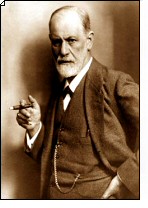
I would like to give these moments a name: theological parapraxes. A "paraprax" is an unintended action that reveals one's hidden thoughts, first celebrated by Sigmund Freud. Although Freud was quite proud, he was not arrogant enough to give this phenomenon its street name: "Freudian Slip." A theological paraprax is an unintended statement that reveals one's actual theological leanings.
For instance, I recently heard a Catholic Priest preach a sermon on John 14:6. During his exposition, he accidentally switched up the verse . Instead of the only way to the Father being through Jesus, he said that the only way to Jesus is through the Father! Now this slip-up was an innocent mistake, and we all make mistakes. But this was more than just a mistake; it was a theological paraprax, for it reveals the structure of a Catholic theology of ministry and grace.
At the most obvious and most humorous level, one could hear the Priest's reversal of John 14:6 as implying that the only way to Jesus is through a "Father" - a Catholic priest. Now the Catholic conception of sacramental ministry is a lot more complicated than simple mediation of Jesus via the Priest. But I couldn't help but do a double-take. It is at least enough to raise an eye-brow.
At a deeper level, this theological paraprax reveals a Catholic understanding of nature and grace. According to the classic maxim "Grace Perfects Nature," the Catholic habit of mind posits a natural human capacity given by the creator ("the Father") which is actualized in us by grace ("Jesus"). So the only way to Jesus is through the Father.
Now am I implying that this sweet Parish Priest was thinking all this when he mixed up the verse? No. That's what makes theological parapraxes so interesting: they reveal the assumptions and trajectories of our formation.
Any thoughts?
What theological parapraxes have you encountered or committed?
Please share your stories!
Subscribe to:
Posts (Atom)

