Showing posts with label Bible Brain Busters. Show all posts

Thursday, June 28, 2007

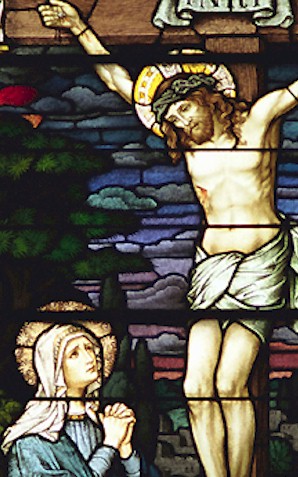
Can one really fill up in one's flesh what is still laking in Christ's afflictions? (Col 1:24)

I am spending some time in Paul's Letter to the Colossians this summer. Just this week I came upon that perpetually perplexing verse: "Now I rejoice in what was suffered for you, and I fill up in my flesh what is still lacking in regard to Christ's afflictions, for the sake of his body, which is the church" (Col. 1:24).

For me, this is quite the Bible Brain Buster: a biblical text that becomes puzzling in light of central Christian affirmations. As with all Bible Brain Busters, it may say more about my assumptions that it does about the difficulty of the text itself. But in this case I think my perplexity is warranted.

The counterweight notion that renders this text puzzling is the affirmation that Christ's suffering is sufficient. Has he not died once for all? Is his suffering not perfect, lacking nothing? Certainly I can understand that our suffering for the gospel might participate in Christ's sufferings. But to think of our suffering as a supplement to something lacking in Christ's suffering seems odd to me.

Perhaps I am misunderstanding the sense in which Christ's suffering is sufficient. Perhaps I am misunderstanding the sense in which Paul is filling up what is lacking. Perhaps I am misunderstanding both. Perhaps this is just an unresolvable contradiction.

Any thoughts?
What do you think this text means?
Does it seem odd to you in light of the sufficiency of Christ's suffering?
Should we revise our talk of the sufficiency of Christ in light of this passage?
Should we allow our talk of the sufficiency of Christ to control our interpretation of this passage?
_

Wednesday, April 11, 2007

What are resurrected bodies like? (I Cor 15)

The resurrection of Jesus is not only good news for him but also good news for us. With the news of Jesus' resurrection from the dead comes the promise of our resurrection. This is not merely a vague hope for an afterlife. It is a future promise established on a past history: God raised Jesus from the dead as the first fruits of our resurrection. Trust is build up over time; in Jesus Christ, God has taken the time to build up trust in his resurrecting power. But since our hope rests on what happened to Jesus, talk of our future life after death cannot proceed by means of mere speculation. When it comes to resurrected bodies, we have something to go on: the risen body of Jesus.

So, based on what we know about the risen Jesus, what are resurrected bodies like?

Paul asks himself this question in I Corinthians 15. It was likely being asked by the Corinthians themselves. After making it clear that the truth of the gospel hangs on the resurrection of Jesus, Paul asks after the meaning of this claim. What does resurrection do to bodies?

It is in this context that Paul makes his famous claim that resurrected bodies on spiritual bodies. Resurrection is no mere continuation of natural embodiment. Flesh and blood cannot inherit the kingdom. The natural must put on or become spiritual. Resurrection is a spiritual reality. Jesus has been raised spiritually. We will be raised spiritually.

Does this mean that Paul rejects bodily resurrection?

I do not think so. Bodily resurrection and spiritual resurrection are not mutually exclusive. To treat them as such is to read Paul's comments here out of context, importing our own meaning of "spiritual" that contradicts the gist of the passage. There are three things I would like to point out that ought to prevent us from pitting spiritual resurrection against bodily resurrection.

(1) The Logic of First fruits. In this passage, Paul repeatedly states that the resurrection of Jesus is the first fruits of our resurrection. The logic of first fruits entails a strong similarity between Jesus' resurrection and ours. Since Jesus' resurrection takes place in time ("on the third day") and space ("from the grave"), we every reason to think that our resurrection will be temporal and spatial. Will our interaction with time and space be greatly altered? Yes. But will we still be embodied creatures? Yes. The logic of first fruits implies whatever "spiritual" means, it does not mean non-bodily.

(2) Use of Parallelism. When the meaning of a word is contested, it is a good idea to check for parallelism which may provide clues. Just such parallels appear in this passage. The contrast between natural and spiritual bodies does not hang isolated, but is accompanied by three other contrasts: perishable/imperishable (v. 42b), dishonor/glory (v. 43a), weakness/power (v. 43b). I suggest that whatever "spiritual" means in the passage, it primarily has to do with describing an imperishable, glorious and powerful body. Such adjectives imply a radical transformation of our bodies, but not necessarily the setting aside of bodily life.

(3) Putting the Spirit back in Spiritual. Lastly, I would suggest that the language of "spiritual" not be pre-determined by our understanding of "spirit" in contrast to "nature," but rather be linked definitively to the Holy Spirit (a.k.a., the third person of the trinity). As Paul says in numerous places, it is by his Spirit that God raised Jesus from the dead. The Spirit is linked to God's act of resurrection. Perhaps "spiritual" bodies are bodies whose life is no longer temporarily sustained by the cause-and-effect system of nature, but eternally sustained by the Holy Spirit who indwells them as God's very presence and power.

In light of these points, I would argue that the spiritual character of the resurrection does not set aside the body, but is a gift given to our bodies. Resurrection surpasses yet includes bodily life.

Any thoughts?
What can we really say about our future in Christ?
Do these points help clarify the sense of "spiritual" bodies?
What are the implications for present life in the body if our bodies will be raised?
_

Wednesday, March 21, 2007

In what sense did Jesus "have to" die? (Bible Brain Busters)

During this Lenten season I have been struck once again by the repeated refrain throughout the New Testament that Jesus "had to" die. I am thinking specifically of the Gospels' ample use of the term "dei," which is usually translated by the phrase "it was necessary" but sometimes simply "must" or "had to." Whatever we say about Jesus' death, the language of the New Testament seems to preclude any thought that it "just happened." Jesus didn't just have a bad weekend in Jerusalem; Jesus had to die.

This Biblical habit of speech is not only a Brain Buster for those who object to any kind of necessity imposed on seemingly contingent historical events. It is a brain buster for all Christians, inasmuch as Christians proclaim the deity of Jesus Christ. For if (a) Jesus had to do something, and (b) Jesus is God, then (c) God had to do something. No matter what kind of metaphysical baggage you associate with God, the statement that God must do something requires clarification and/or qualification. In other words, if we aim to be coherent in our speaking of the gospel, we must specify to the best of our ability in what sense Jesus had to die?

So, in what sense was Jesus death necessary?

The following alternative answers immediately come to mind:

(1) Dramatic Necessity. The first and most qualified sense in which we could understand the biblical language of necessity is in purely dramatic terms. Jesus had to die just like any other character in a good story had to do the things they do. Good stories have a sort of internal logic to them, where a character is driven in a certain direction so that what happens is exactly what has to happen. Perhaps this is all the Evangelists mean when they say that Jesus had to die. This option has the advantage of avoiding more knotty issues of necessity imposed on God. On the other hand, this may make the language of necessity meaningless, killing it by the death of a thousand qualifications. There certainly is dramatic necessity in the gospels; but is the death of Jesus a mere dramatic necessity?

(2) Absolute Necessity. At the other extreme, we might say that the death of Jesus is an absolute necessity. Just because of who God is and/or how reality is structured, God will end up becoming human and dying for us. God knows that his creation will rebel but creates anyway, thus making himself culpable for its rebellion unless he resolves it, which can only be done by the death of Jesus. Some of our presentations of the gospel give the impression that God is under an absolute necessity to undergo death for our sakes. Now this approach has the advantage of taking the biblical language of necessity in its strongest sense. It also locates God's history for us as a consequence of his very being. But it runs into serious objections. The first is that it seems to impose some kind of external necessity on God: God must do this or that to be God. This is a weak objection because this absolute necessity could flow from the absoluteness of God's very being rather than from without. But it is dangerous water nonetheless. There is another, much stronger objection: that the absolute necessity of the cross undermines its gracious character. If God had to do it, then why should it be perceived and celebrated as a gift? The language of grace risks the death of a thousand qualifications if the language of necessity is taken in an absolute sense.

(3) Conditional Necessity. A common resolution of this problem is to employ the category of conditional necessity. Jesus had to die in the sense that once God had freely decided to create the world and establish a covenant with his people, the fulfillment of God's covenant in the death of Jesus is necessity. If certain conditions are met, this event must happen. This is a nice mediating option and one worth seriously considering. However, one concern needs to be raised: is God really the Lord of his covenant if he is "backed into a corner" in this way? Is there any indication in the New Testament God's covenant requires this sort of solution? It seems just as likely that the covenant was set up precisely as the context in which God would do what he does in Jesus Christ. The logic of conditional necessity is illuminating and I don't want to rule it out. But if adopted, it must be employed delicately so as to avoid the impression that Jesus is an afterthought.

(4) Willed Necessity. An alternative resolution is to see the death of Jesus as a willed necessity: God chooses that this will happen, it does so happen, and so in retrospect we can say it must have happened. One need not argue that God so determines everything that happens in history in order to take this view with regard to Jesus' death. One need only say that in this special case God willed certain events to take place (cf. Acts 4:28). On the basis of God's self-revelation we can infer that God has chosen to become this man Jesus in order to die for us. The question of whether God could have done something else is either left open as unanswerable or banned as an inappropriate question. The advantage here is that the language of necessity is taken in its full weight without imposing anything on God or undermining the gracious character of his actions. Also, the death of Jesus is taken as definitive for our understanding of God, rather than an afterthought of God's character or actions. The problem, however, is that it does not fully satisfy one's curiosity about the nature of this necessity. Could it have been otherwise? Why this way and not some other? These seem to be fair questions, and thoroughgoing answers to them often illuminate the significance of the cross. Perhaps this approach is wise in closing these speculative doors; but I'll have to admit my own desire for a more clear and comprehensive answer.

Any thoughts?
In what sense do you think Jesus "had to" die?
Do these alternatives cover the field of logical options? What's missing?
Are you inclined towards one of these options? Why?
_

Thursday, March 15, 2007

What happened to Jesus between Good Friday and Easter Sunday? (I Pet 3:19 - Bible Brain Buster)

We talk a lot about the significance of Jesus' cross and resurrection (as we should). But what went on between them? There are some vague but striking references to this interval in both canon and creed. First Peter provides the most intriguing reference and is thus worthy of addressing as a Bible Brain Buster:

"For Christ died for sins once for all, the righteous for the unrighteous, to bring you to God. He was put to death in the body but made alive by the Spirit, through whom also he went and preached to the spirits in prison who disobeyed long ago when God waited patiently in the days of Noah while the ark was being built." (I Pet 3:18-20a)

Huh? Was the dead Christ preaching on Holy Saturday? As usual, I'd like to lay out some interpretive options. But it won't be simple list, but a series of questions with multiple plausible answers. Accordingly, one's view could combine different options under each of these headings. Needless to say, one's prior inclinations regarding the significance of Christ's death will affect one's approach to this matter. As with all Bible Brain Busters, we are never interpreting texts in a vacuum but rather in collision with our other beliefs -- that's why they bust our brains!

I. When? The Question of Timing

First we must ask when this stuff took place. Although the title of this post prejudices the matter a bit, I Pet 3 does not itself explicitly identify this activity as happening on Holy Saturday. At least three options present themselves:

(1) The Pre-Existent Christ was preaching to sinners at the time of Noah. If you believe that Christ lived by the Spirit of God prior to his incarnation, it is not hard to imagine that he was performing a hidden work at the time of Noah. Perhaps this explains the Peter's mention of Christ preaching "through the Spirit." Of course, this doesn't answer the question of Holy Saturday, but it may make sense of this particular passage.

(2) The dead soul of Jesus preached during the literal 30 hours that he was dead. After his death, Jesus "through the Spirit" preached to condemned spirits from the time of Noah. This is pretty straightforward, though it requires powerful imagination. Also, one might wonder whether the category of "time" gets jumbled by death.

(3) The Exalted Jesus Christ preaches to spirits in heaven. Another possibility is that this preaching happens at a later time, at the ascension or perhaps even still and into the future. This has the advantage of locating I Pet 3 in a more familiar context: Christ's exaltation to the right hand of the father and sitting as judge of the world and king of heaven. But it leaves open the question of the relation of Christ's death to sinners who died before his coming.

II. What? The Question of Content.

Unfortunately, First Peter only says that Christ preached. It doesn't say what he preached. Some possibilities:

(1) Preaching Bad News. Perhaps Jesus simply reiterated God's judgment on past sinners. This doesn't seem to accomplish much, but at least it is capable of answering the question of what Jesus was doing on Holy Saturday. This would also fit well with option I.1.

(2) Preaching Good News. Perhaps Jesus was giving these past sinners a "second chance." Perhaps all those who died before Jesus were in some kind of "holding tank" until the definitive time of Jesus. This might serve to explain the strange incident in Matt 27:52-53 where the bodies of righteous were raised and seen walking around Jerusalem. These are sensible possibilities with some weight of tradition behind them. But they do require considerable speculation. Note that this could also go with option I.3.

(3) Not Preaching, but Presence. Another possibility is that the language of "preaching" should not be taken so literally. Do dead people really "do" things? Perhaps Jesus' spiritual presence with the dead was a gesture or sign which "proclaims" news of his atoning death (either as good news or bad news, per the previous options). This could be developed in conjunction with the death of Christ as his passive work. Perhaps this is an extension of Christ's death as a substitution for us - he undergoes both physical and spiritual death in our place. Although this interpretation makes some sense, it risks not taking this passage at face value. It says "preached," and we should be careful of skirting past it.

Who? The Question of Scope.

Lastly, we must ask to whom Christ was "preaching."

(1) Just those sinners at the time of Noah. Perhaps First Peter is simply a revelation that Christ had a special mission to those who died at the time of Noah. Perhaps Peter's community had a particular interest in that generation. But why that generation rather than any other? Though plausible and rather straightforward, this seems to be an odd, even superfluous, interpretation of this passage.

(2) More than just those at the time of Noah. Perhaps those at the time of Noah are a symbol of a larger group of spirits to whom Christ proclaims through the Spirit. One could easily see that sinful generation as a synecdoche of the many generations who died before Christ. This makes the passage more significant. However, one would need some kind of warrant for making this leap (such as symbolic usage of Noah's generation in comparative Jewish literature).

(3) All the dead. This is really an extension of (2). If time gets jumbled by death, then we could claim that Christ enters into the spirit world to encounter all those who have died before and after his death. This could be Peter's narration of what Christ does for all in the generation resurrection. This integrates the text and the whole notion of Holy Saturday into a larger nexus of Jesus' identity and work. But, once again, it requires some leaps that risk obscuring the plain sense of the text.

Well, there's some options. Hopefully this helps splice out the possibilities and, more importantly, the interpretive and theological issues at stake in this passage. Wherever one lands, in seems appropriate during this season to contemplate the Christ's death in all its aspects - not just to Good Friday, but through Holy Saturday too.

Any thoughts?
Have I missed any options?
What options attract you?
How might you combine answers to these different questions?
What is at stake in one's understanding of Holy Saturday?
How do you commemorate Holy Saturday in your personal and corporate worship life?
_

Wednesday, February 07, 2007

"This generation shall not pass, till all these things be fulfilled" (Bible Brain Busters)

In each of the synoptic Gospels, we find Jesus preaching a "little apocalypse" upon his arrival in Jerusalem. After describing in graphic detail wars, weather, and wild things in the sky, Jesus states, "Truly truly I say to you, this generation shall not pass, till all these things be fulfilled" (Matt 24:34; Mark 13:30; Luke 21:32). What?! Did Jesus' generation really live to see these things? Did the world end and we missed it? Or was Jesus wrong? This a real Bible brain buster: biblical texts that become puzzling in light of central Christian affirmations. What should we do with this one?

This problem was thrust upon me for the first time in college. I have since then encounter a number of alternative solutions, none of which is entirely satisfying but each of which is helpful in thinking through the implications of interpreting these Jesus-logion. As is my custom, I'll lay out these basic alternatives for the purpose of further discussion.

(1) Jesus was wrong. The first and most straightforward response is to just admit that these words are wrong. Jesus predicted apocalyptic events that he thought would happen during the lifetime of his disciples, but they did not happen. Perhaps he was only wrong about the timing, and these things will still happen later. Perhaps these things will not happen at all. Jesus may still be a teacher or example worth following, but on this matter he dropped the ball. The benefit of this answer is its honest approach to the text (it does not require the kind of exegetical somersaults performed by many other options). The cost of this answer is that it undermines Jesus' credibility, which is not a very satisfying solution to a Bible brain buster, especially given that the "central Christian affirmation" that renders this text puzzling is Jesus' credibility as a prophet.

(2) The Evangelists were wrong. This response is really a variation on the first view, but differs enough in motive and results that it should be treated independently. Instead of impugning Jesus with false prophecy, one blames the apostles for getting the words wrong. Maybe they misheard Jesus. Maybe they misunderstood him. Maybe they assembled the texts in a misleading order. Maybe they let their apocalyptic agenda obscure the simple teachings of Jesus. However construed, this approach protects Jesus by getting behind the apostolic witness to him. The benefit of this option is that one can retain the intellectual integrity of the first option without having to discredit Jesus. The cost of this option is that it is strategically shaky: how does one determine which apostolic words are really from Jesus, given that what we know of Jesus is through the apostles? Surely there are some good historical claims that could be made regarding the difference between Jesus and the nascent Christian community, but one must be careful how far one goes with this strategy, because the temptation will always be to attribute to Jesus what we like and attribute to the early Church what we don't like. Such a distinction between Jesus and the church is true in principle and can be applied tactically in some cases (perhaps this one), but is a dangerous overall hermeneutical strategy.

(3) These words refer to spiritual, not historical, matters. This and the following responses attempt to close the credibility gap by tinkering with the referent these words. The first option is to "spiritualize" these predictions. These words are about the spiritual battle within or above, not on the historical plane. The benefit of this approach is that Jesus and the disciples are respected as credible prophets of God. Furthermore, these words have potential to be spiritually useful to readers in many contexts. The cost of this approach is the same as any spiritualistic interpretive maneuver: one is left wondering how to evaluate competing spiritual readings. Such a response "solves" the puzzle by creating a smoke-screen behind which to hide rather than trying hard to settle the matter.

(4) "This generation" refers to something later. Another way to close the credibility gap is to fix the referent of "this generation." There are a number of ways to do this. The term "this generation" could itself be taken as prophetic, speaking directly to the final generation of earthly time. Or the term "generation" could refer to the human race as a whole, which is a possible (though unlikely) meaning of the original Greek term. Either way, the phrase shifts in referent so that these events are still coming in the future. The benefit of this approach is that the rest of Jesus' words in this apocalyptic discourse can remain literal (wars, storms, etc.) and thus the plain sense of most of the text is affirmed. Also, this strategy of delay is a quite common Christian response with a respectable pedigree and should therefore be taken seriously. The cost of this approach is sacrificing any sensible meaning of this particular phrase. If "this generation" doesn't mean the generation addressed by Jesus and/or the Evangelists, it has no rhetorical force. Why put a time-line on your predictions if it is not really a time-line at all? It would have been better to just say nothing. A good interpretive rule of thumb is to avoid readings that render portions of texts superfluous and irrelevant to their first hearers. Mysterious, maybe; meaningless, never!

(5) "These things" refers to something earlier. Instead of pushing these events into the future by shifting the referent of "this generation," one could place these events in the past by shifting the referent of "these things" to events which did in fact occur during the lifetime of Jesus' contemporaries. The benefit of this approach is the avoidance of hermeneutical somersaults that explain away the striking seriousness with which these words are spoken. It also establishes Jesus' actual credibility by attributing to him fulfilled prophecy, rather than just protecting his potential credibility by attributing to him not-yet-fulfilled prophecy. The difficulty of this approach is that one must acknowledge the use of apocalyptic metaphor in describing real life events. This is tricky, but not uncontrollably slippery, since Jesus uses traditional apocalyptic language for which their is extant comparative literature.

To what events could these words refer? What happened soon after Jesus spoke these words that could be aptly described in these apocalyptic terms?

(5a) The Jewish War and the Destruction of the Temple (66-72 C.E.). This seems historically plausible. Some of Jesus' words bear uncanny resemblance to specific incidents surrounding the Jewish War (e.g., fleeing to the hills). The destruction of the Temple in Jersusalem was the big event for first century Jews, and Jesus' prediction of it would be a major point of emphasis for nascent Christianity. The benefit of this approach is its ability to sufficiently explain most of Jesus' apocalyptic discourse. The cost of this approach is that it has difficulty stretching to accommodate all of the apocalyptic teaching of Jesus, let alone the rest of the New Testament. Once again, good tactic for this text, but not necessarily a good general strategy.

(5b) The Death and Resurrection of Jesus Christ (30 C.E.). An alternative approach identifies these events as the apocalyptic passion and resurrection of Jesus Christ. A number of apocalyptic events are narrated as part of the passion story (e.g., darkening of the sky, the veil torn in two, seeing dead people walking about, the earth shaking, etc.). The New Testament certainly sees the death and resurrection of Jesus Christ as the most important apocalyptic event by which all other apocalyptic events should be understood, including the destruction of the Temple. The benefit of this approach is its focus on Jesus, thus carrying with it weighty theological overtones (that'll preach!). It also has a wider explanatory power for New Testament apocalyptic. The cost is that the metaphors of this particular passage may not fit well as descriptions of Jesus' passion. This may be a good interpretative strategy, but might not be tactically application to this case.

Any thoughts?
Do these cover the basic options? What's missing?
Which option do you lean towards? Why?
Does this typology of approach have a wider application to question of eschatology?
_

Thursday, February 01, 2007

The Ethics of God (Bible Brain Busters)

A common objection leveled at the Bible is its unseemly portrayal of God. The Bible attributes some pretty nasty stuff to God. Although these are not limited to the Old Testament, the OT provides the most striking and famous examples. For a sampling of such atrocities, see the list provided by a reader in the Bible Brain Busters suggestion box.

This is actually a very old objection, dating back to the earliest days of Christianity (and even before that the Jews were already facing this criticism). The age of this problem is both bad news and good news. The bad news is that, since some of the greatest minds have tried to tackle this problem, we will most likely continue to struggle with these texts until the end of time. The good news is that, again since some of the greatest minds have tried to tackle this problem, a number of rich options have been developed to help us begin thinking through this problem for ourselves. In order to keep us from reinventing the wheel, I'll lay out some of these options as a conversation starter.

(1) Reject the passages. One option is to simply reject these passages out of hand as not the genuine Word of God. This option should be praised for its intellectual honesty. But on what basis does one determine which parts of the Bible are good and which are bad? One would have to adopt an independent moral code and place the scripture under its authority.

(2) Accept the passages. The opposite approach is to just accept the passages as is. God is just like that. God does crazy things like this and tells others to do them. Who are we to judge God? Although this approach evidences a confidence in God's revelation, it does not really answer the question directly but avoids it. Clearly there is something strange about some of God's actions and commands in the Bible that should give us pause.

(3) Reject the OT. One famous option (associated with Marcion) has been to reject the Old Testament as the story of an evil God who has been replaced by the good New Testament God. The advantage here is its straightforward theological decisiveness and a seriousness about the newness of the New Testament. The problem, however, is that the New Testament at every point underlines the continuity of God's identity as the God of Israel. Also, this doesn't really solve the problem, since there are some troubling things in the New Testament too (e.g., the Book of Revelation gets pretty bloody!).

(4) Allegorize the Passages. A long standing tradition is to see these stories as allegories for one's spiritual life. Killing the prophets of Baal really means putting to death one's fleshy desires. This is a very practically fruitful option and is certainly useful in some cases. However, one runs against the trouble of determining which passages to allegorize and how to properly allegorize them. To answer this question, one is inevitably led to some external guide to make such decisions. Furthermore, the problem of the morality of God's actions is not really solved here, but avoided by a sort of spiritual slight-of-hand.

(5) Progressive Revelation. A more nuanced option is to say that God's revelation of himself is a slowly unfolding history whereby he unveils aspects of his character in a cumulative fashion over time. Thus we learn of the judgment of God in some passages, the grace of God in others, all of which come to their culmination in Jesus Christ, where God is definitively revealed. The advantage here is that one can acknowledge the morally objectionable character of some passages without having to right them off. The disadvantage is the can of worms open by a notion of progressive revelation: How do we know that God has definitively revealed himself? On what basis can we discern "progress" in revelatory history? If God was already all these things, why did he not reveal himself accordingly from the beginning? Is God himself progressively growing and figuring things out along the way?

(6) Progressive Reception of Revelation. An alternative version of progressive revelation is to see the Bible as God's chosen witness to revelation, and as a human witness it reflects its author's assumptions even as it sufficiently witnesses to God's self-revelation in history. God is who he is, and when he acts in history he acts fully as himself. Yet the human reception of this revelation is not always complete. The advantages here are similar to the notion of progressive revelation, except some of the problematic implications (e.g., progress in God) are cut off. The danger here is that one might be tempted to go through the Bible and says which parts are good and which are bad. Although we can do some internal discernment (according to the rule "scripture interprets scripture"), this is always a tricky thing.

Any thoughts?
Have a rightly described these options?
Are any major options missing?
Are you inclined towards one of these approaches? Why?
What are some additional strengths and weakness of each option?
_

Wednesday, January 24, 2007

"The Father is Greater than I" (Bible Brain Busters)

"The Father is Greater than I" - Jesus

Is the Son less than the Father? Is the Father greater than the Son? Even as it lifts up Jesus Christ to a high position in relationship to God the Father, the New Testament repeatedly and variously subordinates the Son to the Father. Since the church rejected the subordinationism of Arius at the most crucial moment in the development of the doctrine of the trinity (Nicaea 325), these texts deserve comment.

I would love to discuss each text in context with great detail. I may do so at some time. At this point, I'd simply like to highlight the subordinationist language of the Gospel of John, exemplified by but not limited to John 14:28: "The Father is great than I." How might we go about interpreting such statements?

Let me identify a few interpretive options:

(1) Functional Christology. One option is to say, "These are functional, not ontological statements." These statement ascribe a certain saving function to Jesus Christ and that's it. This may not necessarily imply a denial of Jesus' ontological status (a.k.a., the constitution of his being). One could simply say that such affirmations are post-Biblical and not relevant to interpreting the texts at hand. This approach has the advantage of letting the texts speak without overloading them with doctrinal questions. The disadvantage is that one's doctrinal reflection becomes dislodged from scriptural interpretation. Also, it's kind of a cop-out.

(2) Jesus is not divine. Another option is to say that these texts undermine the doctrines of the trinity and the incarnation. These are later traditions that do not match up with the scriptures. The New Testament tells the story of the man Jesus of Nazareth who is a great teacher, leader, and maybe even savior (in some sense), but he is certainly not God. He is a man under the authority of God. The strength of this position is it has the guts to take the scriptures at face value and see where they lead. (Whether this move is "gutsy" anymore is debatable.) The weakness of this approach is that is not only gives up on the tradition of the church but must now deal with the amazing affirmations the New Testament does makes about Jesus. How can the word-become-flesh have been with the father from the beginning? How can Christ be the firstborn of all creation? Basically, this approach trades one set of Bible brain busters for another. As before, one's "problem texts" reveal one's commitments!

(3) Jesus is divine-ish. A mediating option is to affirm the divinity of the Son, but in the sense of a heavenly being mediating between God the Father and us. He is a sort of a half-man, half-God. So the subordination language makes sense because Jesus is on the rung of the ladder right between God the Father and the rest of creation. This is actually a common Christian way of thinking. The strength of this position is that it is probably the easiest position to understand while still assenting to all the various and seemingly contradictory Christological affirmations in the New Testament. The problem with this approach is that it undermines the two-natures doctrine of the church by "mixing" the natures of Christ. It says Jesus is both divine and human, but so undermines the meaning of divinity and humanity that the affirmation becomes meaningless. Jesus becomes a sort of mythic being between God and humanity, rather than true God and true human.

(4) The Father and the Son are equally divine, but the Son's human flesh is subordinated to the Father. One classic "solution" to these subordination texts is to assign all of them to the human nature of Jesus Christ. The Son is the fully equal and co-eternal second person of the trinity. In the course of time, the Son adds a human nature. As a creature, this human flesh is of course subordinated to the Father as its creator. But this in no way impinges on Jesus' divine status. The advantage of this approach is that it is able to account for all kinds of texts by strategical attributing some to the divine nature and others to the human nature. It is also has a long pedigree in the history of the church, and so should be treated as serious option. The disadvantage of such an approach is one is forced to play hermeneutical games: Who are we to say that Jesus is talking about his human nature in one verse and his divine nature in another? On what basis can we make such decisions? Does it even make sense to divide Christ up this way?

(5) The Father and the Son are equally divine, but divinity permits some kind of subordination. A final option is to permit some kind of subordination within the divine nature. The driving assumption here is that one's God-concept should be based on the concrete revelation of God. Where has God revealed himself? In Jesus Christ, who is God-incarnate. If we start with where and when God shows up, the first thing we learn about God is that God can become human. More specifically, the Son became human. And this Son, who is fully God, willingly subordinates himself to the Father -- not just in time, but from all eternity, as the Father sends the Son and the Son proceeds from the Father. This approach helps make sense of why the same Gospel of John has both strong statements of Jesus' divinity and his subordination to the Father. The advantage of this approach is that the unity of Christ's person is held together even as his divinity and humanity are affirmed. No need to deny either of his natures or split up his natures to account for subordination texts. Rather, subordination is permitted but within God's very life, so that we can still proclaim that Jesus is the Son of God. The disadvantage should be obvious: how do we think coherently about subordination within God? This truly is a "hard saying." It might be worth the trouble, but is it inherently dangerous. Such an approach should not be taken without counting the cost.

Any thoughts?
Which of these options appeals to you? Why?
Any distinct options missing?
What are some additional benefits and costs of each of these approaches?
How do you generally deal with subordination texts?
__

Wednesday, January 10, 2007

Suggestion Box: Bible Brain Busters

During last week's post I identified and addressed a particular interpretive issue (the Christological conundrum of Jesus' Gethsemane prayer) as an example of a Bible Brain Buster. A rich discussion followed. Thank you all for reading and pondering. Thanks especially to those who commented.

I would like to address some more Bible Brain Busters, perhaps in the form of a series. However, I do not want to pick them arbitrarily according to my own pet issues. Thus I would like to request suggestions from you.

Let the comments board for this post serve as a suggestion box for Bible Brain Busters: biblical texts that become puzzling in light of central Christian affirmations. Please identify specific scriptural passages and specific questions connected with those passages. No question is too "simple" or "obvious" (actually, the ones we are embarrassed to ask are usually the best ones, because they deal with the most basic and therefore most important matters). This would be a great time to hear from those of you who do not usually comment, since the request is open-ended and there is no pressure to take a "view" on anything.

I hope to see this suggestion box stuffed full over the course of the week!

Any suggestions?
Do you have any interesting Bible Brain Busters?
_

Wednesday, January 03, 2007

Bible Brain Busters: Gethsemane Prayer

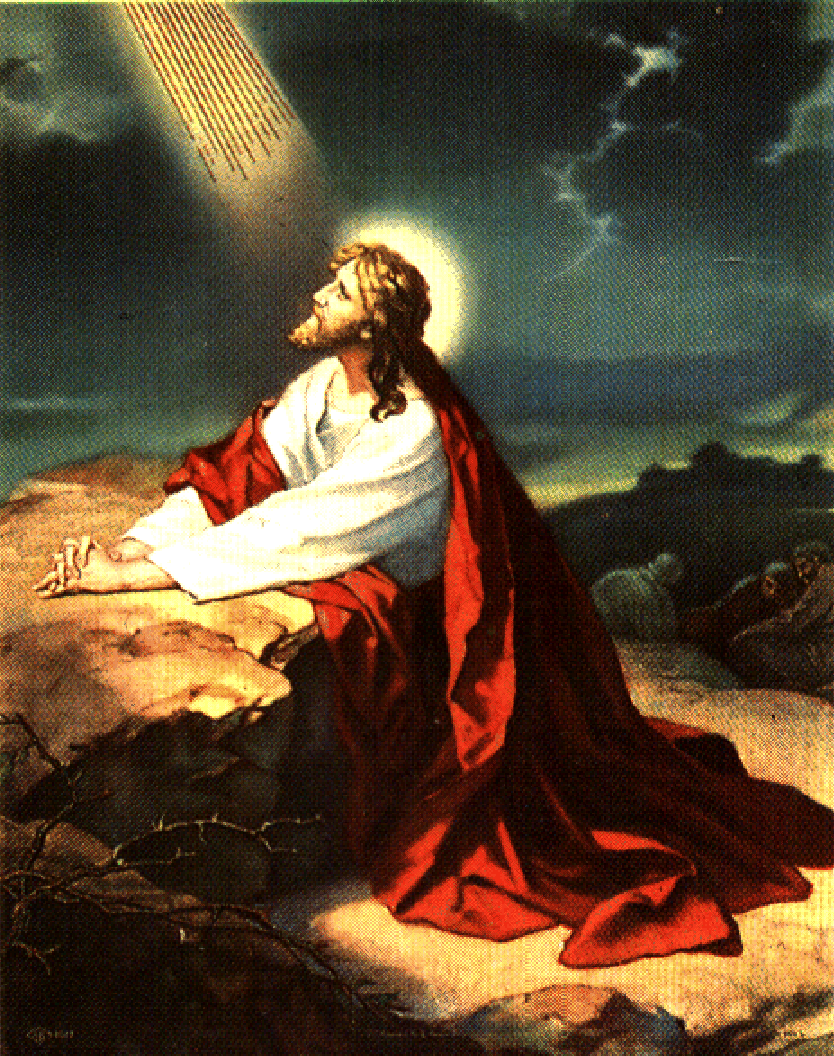
I recently had an interesting conversation about Jesus' prayer in Gethsemane, "Not my will but thine be done." What made the conversation so interesting was the lead question: to whom was Jesus' praying in the garden? God the Father? God, a.k.a. the entire trinity? Himself, a.k.a. God the Son? Our conversation marked this as a genuine Bible Brain Buster: a biblical text that becomes puzzling in light of central Christian affirmations. In this case, how do we think through the prayer life of Jesus in light of his divine nature?

Since the question itself is just as interesting as the answer, let me offer a few possible responses before reflecting directly upon the significance of the question:

Option 1: The man Jesus is praying to God.

This first option is not really a solution but a denial of the problem. The story of the Garden of Gethsemane is simply a story of a human being crying out to God. Jesus may have been a perfect human being, but he was a human being nonetheless, and so prays to God like any other human being. Within this option a number of approaches to the divinity of Jesus could be taken: God the Son emptied himself of all divine attributes at the incarnation; Jesus became divine after the resurrection; Jesus' divinity refers to his perfect reliance on God's Spirit; etc. The strength of this option is its emphasis on Jesus' true humanity and its straightforwardness with regard to this particular text. The weakness of this option is the corners it has to cut with regard to a robust affirmation of the divinity of Jesus.

Option 2: God the Son is praying to God the Father.

This second option grounds the historical Gethsemane prayer in the eternal life of the triune God. In the story of the Garden prayer we catch a glimpse into the inner life of the trinity: the Father sends, the Son is sent; the Father wills, the Son submits his will. The Christian doctrine of the Trinity tells us that God is not a single willing person but three persons, each with its own "personality" and therefore "will." So God has these sorts of internal conversations all the time; the Gethsemane prayer is simply a significant instance of this social life of God. The strength of this option is its emphasis on Jesus' true divinity and its decision to locate this problem within the dynamics of the trinity. The weakness of this option is the new problem this solution creates: is a God with three wills really the one God of Israel? To put it bluntly, this multiple-personality theory runs the risk of tritheism.

Option 3: The Incarnate Son as the man Jesus is praying to God the Father.

This third option tries to bring the doctrine of the trinity and the doctrine of incarnation in close connection with one another in order to make sense of the prayer life of Jesus. In the story of Gethsemane we see the temporal fulfillment of God's eternal purpose to become incarnate. The one God with one will chooses to send himself into human history by taking on the human flesh of Jesus. God's eternal constitution as one being in three persons has this incarnational end in view. So the eternal Son (who has no will other than the Father's) wills to take to himself a complete human nature. This complete human nature includes a fully human will. Therefore, God the Son has two wills: the common divine will shared by all three persons of the Godhead and the human will of Jesus. So, in the garden, the fully divine Son incarnate as a human being is praying to God the Father in the power of their Holy Spirit. The incarnate Son submits his human will to the will of God the Father. The strength of this option is the close connection drawn between the trinity and the incarnation as well as its use of the "two wills" doctrine affirmed at the Sixth Ecumenical Council (Constantinople 680-81). The weakness of this option is the possible implication that God must become incarnate in order to be triune. It is also a terribly complicated answer, which may be perceived as a strength depending on one's temperament.

Well, there's some possible responses to the question of "To whom was Jesus praying?" Now I find this question and the debate between these answers fascinating. I would be happy to discuss the particulars of the matter. But even more interesting to me is that one would even ask this question in the first place. The only person who would treat the Garden of Gethsemane story as a puzzle is someone who assumes a high Christology. You can tell a lot about a person's theological commitments by observing which biblical texts create interpretive difficulties for them. In other words, one's admitted Bible Brain Busters reveal one's deepest beliefs. Even if these beliefs are held implicitly or unreflectively, they exert pressure on us at these critical points. So identifying one's own (and others') Bible Brain Busters helps us to explicitly investigate our beliefs and how they relate to specific Scriptural passages. Hence, they are a worthy entry point for theological inquiry.

Any thoughts?
So, what are your Bible Brain Busters?
Which texts throw you for a loop?
Can you identify what basic beliefs make these texts particularly difficult?
Do you have any thoughts on the example of Jesus' Gethsemane Prayer?

NOTE: If I get a good list of Bible Brain Busters going, I may do a series on them at some point.