As Holy Week creeps closer and closer, I've been thinking about our problems. Not generally observable problems (though those are on my mind), but the deep problem that Jesus deals with in his life, death and resurrection. What is wrong? What is at stake? What makes Jesus' work so important?
I don't want to focus so much on the bad news as much as I want to understand the good news of Jesus Christ which casts light on our problems. A particularly poignant passage in this regard is Romans 5:6-11. What is interesting here is that Paul make three parallel statements indicating what we were when Christ died for us. So, for a moment, I want to zero in on these three different aspects of our problem in order to come to a greater appreciation of Christ's work.
(1) When we were still powerless ... [v. 6]
First of all, we are powerless. We are weak. We lack the power to overcome the death and disease and trials of life. We have fallen short. We are deprived of the best of life. Nobody's perfect. The language of powerlessness reminds us that we need help. We are weak, but God is strong. Lent and Holy Week is as good a time as any to contemplate our weakness in light of God's strength.
This is all true, but our weakness is not the whole story. If our problem is only that we are weak, then Jesus need only help us out, give us a hand. As Paul's language shows, there is more to our problem than our weakness.
(2) While we were still sinners ... [v. 8]
We are not only weak, but we are sinners. We are unrighteous. We are not right. We have broken God's law and so have broken God's heart. Not only are we not perfect, having fallen short; we are also sinners, people who have turned away from God and endangered our relationship with him. The language of sin is important to bring out our culpability in our problem. We are not just faulty; we are lawbreakers. Lent and Holy Week is as good a time as any to contemplate how we have sinned in light of God's righteousness.
This talk of sin certainly deepens our understanding of our problem beyond that of mere weakness. But even the language of unrighteousness is not the whole story. If our problem is reduced to sin, then God need only forgive. God in his everlasting faithfulness can uphold our relationship with him. But, once again, Paul's language reveals that there is even more to our problem than unrighteousness.
(3) When we were God's enemies ... [v. 10]
We are not only weak. We are not only sinners. We are God's enemies. We have not only damaged our relationship with God by breaking his law. We have twisted our relationship into one of enmity. We have not only turned away from God; we have turned against God. We are not just slipping into unintentional sin, or falling short because our of weakness. We are in a state of rebellion. We do not want to live in obedient communion with God. We want to follow our own way. And so we need radical reconciliation, which has been achieved in Jesus Christ. Lent and Holy Week is as good a time as any to contemplate how we have rebelled against God and made ourselves into enemies.
Of course, even the talk of enmity alone would not do. It is the most extreme of the three terms and therefore a helpful corrective to our excuses. But because it is so extreme, it needs to be clarified by the first two terms. We are not enemies of God because God hates us and God is a mean-spirited tyrant. No, the problem is not with God but with us. We have set ourselves up as enemies by our willful disobedience. Our unrighteousness is the content of our enmity. Our powerlessness in the face of death breaks us off from eternal communion with God.
... Christ died for us.
Of course, all this talk of our problems is not an end in itself. In each case, Paul brings up our problem in order to draw attention to the solution. When we were powerless, Christ died for the ungodly. While we were still sinners, Christ died for us. When we were God's enemies, we were reconciled to him through the death of his Son. So, even as we probe our problem, we are drawn to celebrate the solution won in Jesus Christ.
Any thoughts?
Do these three terms help to enrich our account of the human problem?
What aspects are not accounted for by these three terms?
Do we tend to focus on one of these to the exclusion of the others?
Is it appropriate to contemplate our problem in order to appreciate the solution all the more? Is there another way?
_
Thursday, March 29, 2007

Wednesday, March 21, 2007
In what sense did Jesus "have to" die? (Bible Brain Busters)
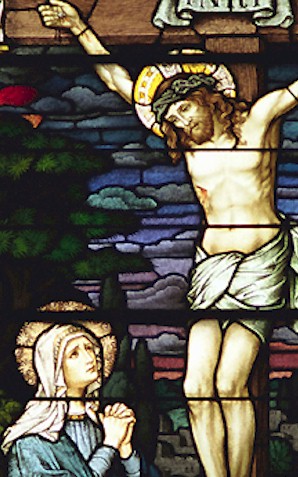 During this Lenten season I have been struck once again by the repeated refrain throughout the New Testament that Jesus "had to" die. I am thinking specifically of the Gospels' ample use of the term "dei," which is usually translated by the phrase "it was necessary" but sometimes simply "must" or "had to." Whatever we say about Jesus' death, the language of the New Testament seems to preclude any thought that it "just happened." Jesus didn't just have a bad weekend in Jerusalem; Jesus had to die.
This Biblical habit of speech is not only a Brain Buster for those who object to any kind of necessity imposed on seemingly contingent historical events. It is a brain buster for all Christians, inasmuch as Christians proclaim the deity of Jesus Christ. For if (a) Jesus had to do something, and (b) Jesus is God, then (c) God had to do something. No matter what kind of metaphysical baggage you associate with God, the statement that God must do something requires clarification and/or qualification. In other words, if we aim to be coherent in our speaking of the gospel, we must specify to the best of our ability in what sense Jesus had to die?
So, in what sense was Jesus death necessary?
The following alternative answers immediately come to mind:
(1) Dramatic Necessity. The first and most qualified sense in which we could understand the biblical language of necessity is in purely dramatic terms. Jesus had to die just like any other character in a good story had to do the things they do. Good stories have a sort of internal logic to them, where a character is driven in a certain direction so that what happens is exactly what has to happen. Perhaps this is all the Evangelists mean when they say that Jesus had to die. This option has the advantage of avoiding more knotty issues of necessity imposed on God. On the other hand, this may make the language of necessity meaningless, killing it by the death of a thousand qualifications. There certainly is dramatic necessity in the gospels; but is the death of Jesus a mere dramatic necessity?
(2) Absolute Necessity. At the other extreme, we might say that the death of Jesus is an absolute necessity. Just because of who God is and/or how reality is structured, God will end up becoming human and dying for us. God knows that his creation will rebel but creates anyway, thus making himself culpable for its rebellion unless he resolves it, which can only be done by the death of Jesus. Some of our presentations of the gospel give the impression that God is under an absolute necessity to undergo death for our sakes. Now this approach has the advantage of taking the biblical language of necessity in its strongest sense. It also locates God's history for us as a consequence of his very being. But it runs into serious objections. The first is that it seems to impose some kind of external necessity on God: God must do this or that to be God. This is a weak objection because this absolute necessity could flow from the absoluteness of God's very being rather than from without. But it is dangerous water nonetheless. There is another, much stronger objection: that the absolute necessity of the cross undermines its gracious character. If God had to do it, then why should it be perceived and celebrated as a gift? The language of grace risks the death of a thousand qualifications if the language of necessity is taken in an absolute sense.
(3) Conditional Necessity. A common resolution of this problem is to employ the category of conditional necessity. Jesus had to die in the sense that once God had freely decided to create the world and establish a covenant with his people, the fulfillment of God's covenant in the death of Jesus is necessity. If certain conditions are met, this event must happen. This is a nice mediating option and one worth seriously considering. However, one concern needs to be raised: is God really the Lord of his covenant if he is "backed into a corner" in this way? Is there any indication in the New Testament God's covenant requires this sort of solution? It seems just as likely that the covenant was set up precisely as the context in which God would do what he does in Jesus Christ. The logic of conditional necessity is illuminating and I don't want to rule it out. But if adopted, it must be employed delicately so as to avoid the impression that Jesus is an afterthought.
(4) Willed Necessity. An alternative resolution is to see the death of Jesus as a willed necessity: God chooses that this will happen, it does so happen, and so in retrospect we can say it must have happened. One need not argue that God so determines everything that happens in history in order to take this view with regard to Jesus' death. One need only say that in this special case God willed certain events to take place (cf. Acts 4:28). On the basis of God's self-revelation we can infer that God has chosen to become this man Jesus in order to die for us. The question of whether God could have done something else is either left open as unanswerable or banned as an inappropriate question. The advantage here is that the language of necessity is taken in its full weight without imposing anything on God or undermining the gracious character of his actions. Also, the death of Jesus is taken as definitive for our understanding of God, rather than an afterthought of God's character or actions. The problem, however, is that it does not fully satisfy one's curiosity about the nature of this necessity. Could it have been otherwise? Why this way and not some other? These seem to be fair questions, and thoroughgoing answers to them often illuminate the significance of the cross. Perhaps this approach is wise in closing these speculative doors; but I'll have to admit my own desire for a more clear and comprehensive answer.
Any thoughts?
In what sense do you think Jesus "had to" die?
Do these alternatives cover the field of logical options? What's missing?
Are you inclined towards one of these options? Why?
_
Thursday, March 15, 2007
What happened to Jesus between Good Friday and Easter Sunday? (I Pet 3:19 - Bible Brain Buster)
 We talk a lot about the significance of Jesus' cross and resurrection (as we should). But what went on between them? There are some vague but striking references to this interval in both canon and creed. First Peter provides the most intriguing reference and is thus worthy of addressing as a Bible Brain Buster:
"For Christ died for sins once for all, the righteous for the unrighteous, to bring you to God. He was put to death in the body but made alive by the Spirit, through whom also he went and preached to the spirits in prison who disobeyed long ago when God waited patiently in the days of Noah while the ark was being built." (I Pet 3:18-20a)
Huh? Was the dead Christ preaching on Holy Saturday? As usual, I'd like to lay out some interpretive options. But it won't be simple list, but a series of questions with multiple plausible answers. Accordingly, one's view could combine different options under each of these headings. Needless to say, one's prior inclinations regarding the significance of Christ's death will affect one's approach to this matter. As with all Bible Brain Busters, we are never interpreting texts in a vacuum but rather in collision with our other beliefs -- that's why they bust our brains!
I. When? The Question of Timing
First we must ask when this stuff took place. Although the title of this post prejudices the matter a bit, I Pet 3 does not itself explicitly identify this activity as happening on Holy Saturday. At least three options present themselves:
(1) The Pre-Existent Christ was preaching to sinners at the time of Noah. If you believe that Christ lived by the Spirit of God prior to his incarnation, it is not hard to imagine that he was performing a hidden work at the time of Noah. Perhaps this explains the Peter's mention of Christ preaching "through the Spirit." Of course, this doesn't answer the question of Holy Saturday, but it may make sense of this particular passage.
(2) The dead soul of Jesus preached during the literal 30 hours that he was dead. After his death, Jesus "through the Spirit" preached to condemned spirits from the time of Noah. This is pretty straightforward, though it requires powerful imagination. Also, one might wonder whether the category of "time" gets jumbled by death.
(3) The Exalted Jesus Christ preaches to spirits in heaven. Another possibility is that this preaching happens at a later time, at the ascension or perhaps even still and into the future. This has the advantage of locating I Pet 3 in a more familiar context: Christ's exaltation to the right hand of the father and sitting as judge of the world and king of heaven. But it leaves open the question of the relation of Christ's death to sinners who died before his coming.
II. What? The Question of Content.
Unfortunately, First Peter only says that Christ preached. It doesn't say what he preached. Some possibilities:
(1) Preaching Bad News. Perhaps Jesus simply reiterated God's judgment on past sinners. This doesn't seem to accomplish much, but at least it is capable of answering the question of what Jesus was doing on Holy Saturday. This would also fit well with option I.1.
(2) Preaching Good News. Perhaps Jesus was giving these past sinners a "second chance." Perhaps all those who died before Jesus were in some kind of "holding tank" until the definitive time of Jesus. This might serve to explain the strange incident in Matt 27:52-53 where the bodies of righteous were raised and seen walking around Jerusalem. These are sensible possibilities with some weight of tradition behind them. But they do require considerable speculation. Note that this could also go with option I.3.
(3) Not Preaching, but Presence. Another possibility is that the language of "preaching" should not be taken so literally. Do dead people really "do" things? Perhaps Jesus' spiritual presence with the dead was a gesture or sign which "proclaims" news of his atoning death (either as good news or bad news, per the previous options). This could be developed in conjunction with the death of Christ as his passive work. Perhaps this is an extension of Christ's death as a substitution for us - he undergoes both physical and spiritual death in our place. Although this interpretation makes some sense, it risks not taking this passage at face value. It says "preached," and we should be careful of skirting past it.
Who? The Question of Scope.
Lastly, we must ask to whom Christ was "preaching."
(1) Just those sinners at the time of Noah. Perhaps First Peter is simply a revelation that Christ had a special mission to those who died at the time of Noah. Perhaps Peter's community had a particular interest in that generation. But why that generation rather than any other? Though plausible and rather straightforward, this seems to be an odd, even superfluous, interpretation of this passage.
(2) More than just those at the time of Noah. Perhaps those at the time of Noah are a symbol of a larger group of spirits to whom Christ proclaims through the Spirit. One could easily see that sinful generation as a synecdoche of the many generations who died before Christ. This makes the passage more significant. However, one would need some kind of warrant for making this leap (such as symbolic usage of Noah's generation in comparative Jewish literature).
(3) All the dead. This is really an extension of (2). If time gets jumbled by death, then we could claim that Christ enters into the spirit world to encounter all those who have died before and after his death. This could be Peter's narration of what Christ does for all in the generation resurrection. This integrates the text and the whole notion of Holy Saturday into a larger nexus of Jesus' identity and work. But, once again, it requires some leaps that risk obscuring the plain sense of the text.
Well, there's some options. Hopefully this helps splice out the possibilities and, more importantly, the interpretive and theological issues at stake in this passage. Wherever one lands, in seems appropriate during this season to contemplate the Christ's death in all its aspects - not just to Good Friday, but through Holy Saturday too.
Any thoughts?
Have I missed any options?
What options attract you?
How might you combine answers to these different questions?
What is at stake in one's understanding of Holy Saturday?
How do you commemorate Holy Saturday in your personal and corporate worship life?
_
Monday, March 12, 2007
New Items Posted at The Writing of John Drury
Two new items have been posted on The Writing of John Drury:
- Top Ten Reasons to Study Church History - opening lecture for Church History I
- Union with God and the Singularity of God's End in Creating according to Jonathan Edwards
Check 'em out!
_
- Top Ten Reasons to Study Church History - opening lecture for Church History I
- Union with God and the Singularity of God's End in Creating according to Jonathan Edwards
Check 'em out!
_
Wednesday, March 07, 2007
Why Did God Create the World?
 My reading this week is focused on the question of God's purpose in creating. For the first time I have begun to see the importance of this question. Let me first lay out some basic alternative answers to this question, then indicate why I think this question is important.
So, here's some alternative answers to the question: Why did God create the world?
(1) It is an unanswerable speculative question and therefore shouldn't be answered. We only know of the world as created and governed by God, so to ask of why God created the world is to step outside of our created status and inquiry into the unknown depths of eternity. I am sympathetic to this non-response out of respect for God's mystery. However, as we shall see, there is a lot at stake in this question for one's understanding of God. So I am not sure avoiding the question is the best option.
(2) God did not have a purpose in creating; rather, creation is the overflow of God's goodness. Another option is to reject the premise of the question, asserting that God's act of creating is not purposive. One reason to make such a claim is that if God has a purpose, then God is being moved by the purpose, which would undermine God's self-sufficient, omnipotent, immutability. God is not moved by anything else. Yet God creates simply as an outpouring of his being. God is so great that his greatest expands to includes a created world. The advantage of this view is that creation partakes naturally in God's goodness. The problem with this view is that history is pointless. Also, it seems difficult to see how God and the world are really qualitatively distinct.
(3) God did have a purpose in creating. The last option is that God does have a specific purpose in creating the world. With an end in view, God created the circumstances under which this end would occur. Of course, if we are going to say God did have a purpose, we probably should inquire into what this purpose may be. Two possibilities quickly emerge:
(a) God's purpose in creating was to glorify himself. The first possibility is that God created the world so that his own glory would be extended through his intercourse with something other than himself. In other words, God is so great that he thought it worthwhile to replay this greatest in the history of his dealings with creation. The advantage here is that the problems with purposiveness in creation are overcome, as God is not moved by something other than himself, but is rather self-moved out of regard for himself. The disadvantage here is that God seems to be using creatures (some of whom are persons) as means.
(b) God's purpose in creating was for the benefit of creatures. Another possibility is that God created the world for the benefit of creation itself. Out of regard for otherness, God creates something other than himself so that it may know, love and enjoy him. In other words, God creates the world in order to save it. The advantage here is that God's concern for creatures is in the foreground. The problem is that it is hard to imagine God being positively disposed toward creatures before creating them as a reason for creating them.
Of course, it is possible to say both (a) and (b), because God's desire to glorify himself can be executed in such a way that benefits us, as is certainly the case in the covenant of grace. How to think through the unity of these two as God's purpose for creation is an interesting subject to be left for another day (or the comments board).
The interesting thing to point out is that one's answer to the question why did God create the world tells a lot about one's understanding of God's relation to the world. The first answer puts the relation between God and the world in a cloud of mystery. The second answer puts creation in a continuous connection with God as the highest being. The third answers understands history as the working out of God's purpose in creation. However you slice it, there is a lot at stake in this question.
Any thoughts?
Why did God create the world? What do you think?
Have I fairly represented the options? What further advantages and disadvantages of each can be identified?
What other options have I neglected?
Towards which option are you inclined?
_
Wednesday, February 28, 2007
The Tomb of Jesus and the Possibility of Disproving Christianity
 The big religious news this week is, of course, the so-called tomb of Jesus. It is actually not news at all (since it's not "new"), but has garnered attention because of the well-planned media hype for James Cameron's upcoming documentary. In this post, I do not want to talk about the supposed tomb of Jesus, because persons more adequately trained in history and archaeology are addressing it sufficiently. It seems quite clear that this tomb neither proves nor disproves anything about Jesus. But the incident does raise an interesting question: What would it take to disprove Christianity? Or, more narrowly, what would it take to disprove that Jesus rose from the dead?
It seems to me that Christian claims about Jesus require that they can be disproved, at least in principle. I do not think this requirement is thrust upon Christianity by the world, so that Christians must be accountable to some sort of "universally recognized foundations" (whatever they may be). Rather, this requirement is entailed by the kinds of claims Christians make. Some (though perhaps not all) Christian beliefs are claims about states of affairs in the known universe. This is particularly the case with regard to our (putatively central) claims about Jesus, and eminently so regarding his resurrection from the dead. Although this event cannot be explained by the normal operations of the known universe, it took place within the known universe. Therefore, claims concerning this event are vulnerable to counter-claims that could perhaps undermine it. What might constitute a sufficient objection to the belief that Jesus was raised from the dead?
A certain theologian took up this very question and provides a scenario in which belief in resurrection could be undermined: "A letter is discovered in an ancient Mediterranean, now Turkish, village, addressed to one Paul, formerly Saul, of Tarsus. [It reads:] I can hardly believe we got away with it. The place where we hid the body was so obvious, and it took so long before we could finally get rid of it, that I'm amazed no one discovered it. And that story we cooked up about seeing him alive after they crucified him - not just once, but for forty days! Admittedly a few Athenians though this was pretty funny, but it's astonishing how many people have believed it. So let's press on to Rome and see how far we can carry this thing. Be careful, and write when you are able...As ever, Peter." (Bruce Marshall, Trinity and Truth [CUP, 2000] p. 167)
What I appreciate about this example is its literary character: Christian claims about Jesus rest primarily on literary evidence (apostolic letters, etc.), and thus counter-claims would be especially fitting if they also rested on literary evidence. Of course, such evidence would need to be thoroughly tested for authenticity. But if it passed such historical tests, a letter like this could perhaps undermine belief in Jesus' resurrection. If Christians kept on claiming that Jesus was raised while at the same time accepting the veracity of this letter, people would have good reason to question our integrity.
I, for one, do not think it is possible or desirable to try to prove Jesus' resurrection. However, I do think Christians have a vested interest in Jesus' resurrection not being disproved. I have observed that many Christians who (rightly, in my mind) eschew proving Christianity sometimes make the mistake of thinking Christianity cannot be disproved at all. In this case, an appropriate confidence (that our beliefs will not be undermined) slips into an inappropriate stubbornness (that our beliefs cannot be undermined). But if no evidence whatsoever could undermine our belief in Jesus' bodily resurrection, then it seems likely that we do not understand this belief to entail claims about real states of affairs in the real world. In other words, we don't really believe in the resurrection as an actual event in space and time. I do believe that the resurrection of Jesus actually happened. Thus I have to acknowledge that, in principle, this event could be disproved, although it has not yet been disproved, and it is practically-speaking quite difficult to disprove, and there are good reasons for thinking it never will be disproved.
Any thoughts?
Do you agree that Christian beliefs can at least in principle be disproved? Why or why not?
What other examples could be provided as a plausible basis for counter-claims against basic Christian beliefs?
Why does it matter that Christian claims be disprovable?
_
Saturday, February 24, 2007
The Writing of John Drury Revised and Updated
Check out these new items on the revised and updated version of The Writing of John Drury:
NEW>>> "Whatsoever is in God, is God: The Role of Simplicity in Thomas Aquinas' Doctrine of God" [Winter 2007]
NEW>>> "The Resurrection of Christ in Karl Barth's Church Dogmatics I/2, sect. 13-15" [Winter 2007]
The Writing of John Drury contains longer pieces, loose thoughts, and archived drulogion posts. Check it out!
NEW>>> "Whatsoever is in God, is God: The Role of Simplicity in Thomas Aquinas' Doctrine of God" [Winter 2007]
NEW>>> "The Resurrection of Christ in Karl Barth's Church Dogmatics I/2, sect. 13-15" [Winter 2007]
The Writing of John Drury contains longer pieces, loose thoughts, and archived drulogion posts. Check it out!
Wednesday, February 21, 2007
Book Review: "Barth for Armchair Theologians" by John R. Franke
 The following book review will appear in a forthcoming issue of Reviews in Religion and Theology. I am permitted to post it on my website prior to publication, so I thought I'd share my thoughts on John Franke's Barth for Armchair Theologians as this week's thursday theological thought.
It is notoriously difficult to summarize the contribution of any truly great theologian. This is especially true of Karl Barth on account of the quantity and complexity of his work. And yet John Franke has managed to produce a short overview of Barth’s life and thought that is both accurate and accessible. The book’s accessibility is aided by its remarkable brevity and amusing illustrations.
Franke wisely places Barth’s theology within its historical context. He provides just enough biographical data to coherently narrate Barth’s development without getting lost in minutia. In the first chapter, Franke describes the liberal theological tradition into which Barth was immersed as a student. Franke outlines the responses of Schleiermacher and Ritschl to the theological challenge of the Enlightenment and explains how Barth was initiated into a particular form of this tradition through his teacher, Wilhem Herrmann. Conspicuously absent from Franke’s narrative are Troeltsch and Harnack, both of whom are crucial for understanding Barth’s break with liberalism. This chapter also runs the risk of perpetuating unfair prejudices against protestant theology in the nineteenth century. But as it stands, this chapter is an adequate introduction to Barth’s liberal heritage from the vantage point of Barth’s own understanding of it.
In the two following chapters, Franke tells the story of Barth’s break with liberalism and the beginnings of his new theology. Franke shows how religious socialism and the Great War occasioned Barth’s discovery of the strange new world of the Bible. He then discusses the significance of Barth’s Romans commentary, especially regarding its critique of religion and dialectical approach to theological language.
The next two chapters trace Barth’s development from his explosion on the theological scene to his expulsion from Germany by the Nazis. Franke treats Barth’s engagement with the Reformed tradition, his programmatic essays on dialectical theology, and his first cycle of dogmatics lectures at Göttingen in a chapter bearing the title, “The Impossibility Possibility.” This title is unfortunate because Franke uses this phrase to describe Barth’s dialectical theology, whereas Barth uses the same phrase to describe sin! Franke then tells of Barth’s interaction with Roman Catholics at Münster and his courageous conflict with the Nazis at Bonn.
Franke dedicates the remainder of the book to introducing Barth’s Church Dogmatics and assessing Barth’s legacy. These last two chapters contain Franke’s most significant contribution. In an appropriately lengthy chapter, Franke offers what he aptly calls a “basic orientation tour” of the Church Dogmatics. After describing its method, shape, and motifs, Franke deftly summarizes this 8,000-page work in a mere 33 pages. He then concludes his book with an equally impressive tour of the contemporary reception of Barth’s theology. Franke identifies two tendencies in Barth interpretation (the neo-orthodox and the postmodern) and critically incorporates both within Barth’s own dialectic of veiling and unveiling.
Franke’s book performs a nearly impossible task: introduce the theology of Karl Barth without overwhelming its readers by complexity or underwhelming its readers by simplicity. It is therefore an ideal textbook for introductory courses in theology.
Any Thoughts?
What impression would you have of Franke's book if you'd only read this review?
What did you think of Franke's book (if you've read it)?
What is the best way to present accessibly the ideas of a great theologian?
_
Thursday, February 15, 2007
Bruce Metzger Passes Away at 93
 Bruce Metzger, a teacher and model to so many of us, died Tuesday at 93. He truly was a "prince of the Church," one in whom religious interest and scientific spirit were united in the highest degree and with the finest balance. Below you will find the official announcement sent out by the President of Princeton Seminary. Please join me in using the comments board to share how Dr. Metzger touched your life.
Dear Friends,
It is with great sadness that I share the news of the death of Dr. Bruce Manning Metzger, New Testament professor emeritus at Princeton Theological Seminary and, I believe, the greatest American New Testament critic and biblical translator of the twentieth century, died February 13, 2007, at his home in Princeton at the age of 93.
Bruce Metzger was born in Middletown, Pennsylvania on the 9th of February 1914. After gaining a BA from Lebanon Valley College in 1935, he entered Princeton Theological Seminary, graduating with a ThB in 1938. So began a life-long association with Princeton Theological Seminary during which Bruce Metzger became not only a legend himself but also one of the school’s greatest intellectual ornaments. He was ordained in the United Presbyterian Church (now the PC[USA]) in 1939. In 1944 he married Isobel Elizabeth, the elder daughter of John Alexander Mackay, the great Third President of the Seminary, who rebuilt and revitalized the school after the divisions of the 1920s. Bruce Metzger’s sheer brilliance, clarity and Christian devotion set a standard all of his own. He taught while he continued to study (Princeton University, MA[1940], Ph.D. [1942], Classics), serving as Teaching Fellow in New Testament Greek 1938-40 and as Instructor in New Testament 1940-44. He was appointed Assistant Professor 1944-48; Associate Professor 1948-54 and Professor 1954-84. He was named the George L. Collord Professor of New Testament Language and Literature in 1964. He retired in 1984 and was named professor emeritus.
An absolutely preeminent New Testament scholar, Metzger was known internationally for his work in biblical translation and the history of the Bible’s versions and canonization. He was one of the world leaders in textual study of the New Testament, the Apocrypha and the Pseudepigrapha. He served as Chair of the Committee on Translation of the American Bible Society 1964-70, and as Chair of the Committee of Translators for the New Revised Standard Version of the Bible 1977-90. The impact of this work is incalculable and Bruce Metzger saw it through the press almost single-handedly. The NRSV, published in 1990, made changes to the RSV in paragraph structure and construction, eliminated archaisms while retaining the Tyndale-King James tradition, polished renderings in the interest of accuracy, clarity, and felicity of English expression, and eliminated masculine language referring to people, insofar as this did not distort historical accuracy. In 1993 Bruce Metzger presented a copy of the NRSV, Catholic Edition, to Pope John Paul II at the Vatican. Bruce Metzger understood and was passionate about the significance of biblical translation for ecumenical dialogue. In 1957 he served on the committee that translated the Apocrypha (the committee comprised the original RSV Committee plus Metzger, Floyd Filson, Robert Pfeiffer, and Allen Wikgren). In 1972 he chaired the sub-committee that translated 3 and 4 Maccabees and Psalm 151 for an expanded version of the Apocrypha. He personally presented this expanded version to His All Holiness Demetrios I in 1976. It was important to him that Roman Catholic, Greek Orthodox, and Protestant Christians be able to have recourse to a common biblical text as an instrument of unity.
 Bruce Metzger cared about and provided for his students. Generations have been grateful for his Lists of Words Occurring Frequently in the Coptic New Testament, and his Lexical Aids for Students of New Testament Greek (first published in 1946) became a standard study tool. He edited The Oxford Annotated Bible in 1962, and in 1966, along with Kurt Aland, Matthew Black and Allen Wikgren, edited the United Bible Societies’ edition of the Greek New Testament. This text, especially adapted to meet the needs of Bible translators, with its beautiful original font and indication of the relative degree of certainty for each variant adopted in the text, proved to be an enduring landmark. The editors were later joined by Carlo Martini (the Cardinal Archbishop of Milan from 1980 to 2002). A warm friendship grew between Metzger and Matthew Black, the doyen of Scottish text-critical scholars. The honorary degree of Doctor of Divinity from St Andrews University was bestowed on Bruce Metzger in 1964, and all Scots are moved by seeing that he is wearing his St Andrews tie in his portrait in the Speer Library.
There were other honors. In 1994, Bruce Metzger was awarded the Burkitt Medal for Biblical Studies by The British Academy in London (of which he had been a Corresponding Fellow since 1978). This is only awarded in recognition of a lifetime of distinguished Biblical study. Bruce Metzger was elected president of Studiorum Novi Testamenti Societas (1971), the International Society of Biblical Literature (1971), and was the first president of the North American Patristic Society (1972). He was a member of the Institute for Advanced Study in Princeton (1969 and 1974) and visiting fellow at Clare Hall, Cambridge (1974) and Wolfson College, Oxford (1979).
There were many other books, among which the classic studies The Text of the New Testament, its Transmission, Corruption and Restoration (1964, and translated into German, Japanese, Korean, Chinese, Italian and Russian) and The Early Versions of the New Testament, their Origin, Transmission, and Limitations (1977) have been particularly influential. Bruce Metzger’s last publication before his death was Apostolic Letters of Faith, Hope, and Love: Galatians, 1 Peter, and I John (2006).
Bruce Metzger cared passionately about the Bible, and in 1982 became the general editor of the Reader’s Digest Condensed Bible. He lectured throughout the nation and the world, in North and South America, Europe, Australia, New Zealand, Korea, Japan, and South Africa, often at churches and universities where his former students ministered and taught. He was awarded honorary doctorates by Lebanon Valley College, Findlay College, St. Andrews University, the University of Münster, and Potchefstroom University in South Africa.
A Bible autographed by Bruce Metzger is sealed in the time capsule embedded in the corner of Scheide Hall.
Despite all his distinctions, Bruce Metzger never lost his modesty, or his courteous welcome, genuine interest in and encouragement for much younger scholars. He was a warm and supportive colleague within the Seminary and beloved by many scholars and lay people here in Princeton and throughout the world.
Bruce Metzger is survived by his wife Isobel and his sons John Mackay Metzger and James Bruce Metzger.
- Iain Torrance
Any thoughts?
How has Metzger's work influenced you?
Any personal stories?
_
Wednesday, February 07, 2007
"This generation shall not pass, till all these things be fulfilled" (Bible Brain Busters)
 In each of the synoptic Gospels, we find Jesus preaching a "little apocalypse" upon his arrival in Jerusalem. After describing in graphic detail wars, weather, and wild things in the sky, Jesus states, "Truly truly I say to you, this generation shall not pass, till all these things be fulfilled" (Matt 24:34; Mark 13:30; Luke 21:32). What?! Did Jesus' generation really live to see these things? Did the world end and we missed it? Or was Jesus wrong? This a real Bible brain buster: biblical texts that become puzzling in light of central Christian affirmations. What should we do with this one?
This problem was thrust upon me for the first time in college. I have since then encounter a number of alternative solutions, none of which is entirely satisfying but each of which is helpful in thinking through the implications of interpreting these Jesus-logion. As is my custom, I'll lay out these basic alternatives for the purpose of further discussion.
(1) Jesus was wrong. The first and most straightforward response is to just admit that these words are wrong. Jesus predicted apocalyptic events that he thought would happen during the lifetime of his disciples, but they did not happen. Perhaps he was only wrong about the timing, and these things will still happen later. Perhaps these things will not happen at all. Jesus may still be a teacher or example worth following, but on this matter he dropped the ball. The benefit of this answer is its honest approach to the text (it does not require the kind of exegetical somersaults performed by many other options). The cost of this answer is that it undermines Jesus' credibility, which is not a very satisfying solution to a Bible brain buster, especially given that the "central Christian affirmation" that renders this text puzzling is Jesus' credibility as a prophet.
(2) The Evangelists were wrong. This response is really a variation on the first view, but differs enough in motive and results that it should be treated independently. Instead of impugning Jesus with false prophecy, one blames the apostles for getting the words wrong. Maybe they misheard Jesus. Maybe they misunderstood him. Maybe they assembled the texts in a misleading order. Maybe they let their apocalyptic agenda obscure the simple teachings of Jesus. However construed, this approach protects Jesus by getting behind the apostolic witness to him. The benefit of this option is that one can retain the intellectual integrity of the first option without having to discredit Jesus. The cost of this option is that it is strategically shaky: how does one determine which apostolic words are really from Jesus, given that what we know of Jesus is through the apostles? Surely there are some good historical claims that could be made regarding the difference between Jesus and the nascent Christian community, but one must be careful how far one goes with this strategy, because the temptation will always be to attribute to Jesus what we like and attribute to the early Church what we don't like. Such a distinction between Jesus and the church is true in principle and can be applied tactically in some cases (perhaps this one), but is a dangerous overall hermeneutical strategy.
(3) These words refer to spiritual, not historical, matters. This and the following responses attempt to close the credibility gap by tinkering with the referent these words. The first option is to "spiritualize" these predictions. These words are about the spiritual battle within or above, not on the historical plane. The benefit of this approach is that Jesus and the disciples are respected as credible prophets of God. Furthermore, these words have potential to be spiritually useful to readers in many contexts. The cost of this approach is the same as any spiritualistic interpretive maneuver: one is left wondering how to evaluate competing spiritual readings. Such a response "solves" the puzzle by creating a smoke-screen behind which to hide rather than trying hard to settle the matter.
(4) "This generation" refers to something later. Another way to close the credibility gap is to fix the referent of "this generation." There are a number of ways to do this. The term "this generation" could itself be taken as prophetic, speaking directly to the final generation of earthly time. Or the term "generation" could refer to the human race as a whole, which is a possible (though unlikely) meaning of the original Greek term. Either way, the phrase shifts in referent so that these events are still coming in the future. The benefit of this approach is that the rest of Jesus' words in this apocalyptic discourse can remain literal (wars, storms, etc.) and thus the plain sense of most of the text is affirmed. Also, this strategy of delay is a quite common Christian response with a respectable pedigree and should therefore be taken seriously. The cost of this approach is sacrificing any sensible meaning of this particular phrase. If "this generation" doesn't mean the generation addressed by Jesus and/or the Evangelists, it has no rhetorical force. Why put a time-line on your predictions if it is not really a time-line at all? It would have been better to just say nothing. A good interpretive rule of thumb is to avoid readings that render portions of texts superfluous and irrelevant to their first hearers. Mysterious, maybe; meaningless, never!
(5) "These things" refers to something earlier. Instead of pushing these events into the future by shifting the referent of "this generation," one could place these events in the past by shifting the referent of "these things" to events which did in fact occur during the lifetime of Jesus' contemporaries. The benefit of this approach is the avoidance of hermeneutical somersaults that explain away the striking seriousness with which these words are spoken. It also establishes Jesus' actual credibility by attributing to him fulfilled prophecy, rather than just protecting his potential credibility by attributing to him not-yet-fulfilled prophecy. The difficulty of this approach is that one must acknowledge the use of apocalyptic metaphor in describing real life events. This is tricky, but not uncontrollably slippery, since Jesus uses traditional apocalyptic language for which their is extant comparative literature.
To what events could these words refer? What happened soon after Jesus spoke these words that could be aptly described in these apocalyptic terms?
(5a) The Jewish War and the Destruction of the Temple (66-72 C.E.). This seems historically plausible. Some of Jesus' words bear uncanny resemblance to specific incidents surrounding the Jewish War (e.g., fleeing to the hills). The destruction of the Temple in Jersusalem was the big event for first century Jews, and Jesus' prediction of it would be a major point of emphasis for nascent Christianity. The benefit of this approach is its ability to sufficiently explain most of Jesus' apocalyptic discourse. The cost of this approach is that it has difficulty stretching to accommodate all of the apocalyptic teaching of Jesus, let alone the rest of the New Testament. Once again, good tactic for this text, but not necessarily a good general strategy.
(5b) The Death and Resurrection of Jesus Christ (30 C.E.). An alternative approach identifies these events as the apocalyptic passion and resurrection of Jesus Christ. A number of apocalyptic events are narrated as part of the passion story (e.g., darkening of the sky, the veil torn in two, seeing dead people walking about, the earth shaking, etc.). The New Testament certainly sees the death and resurrection of Jesus Christ as the most important apocalyptic event by which all other apocalyptic events should be understood, including the destruction of the Temple. The benefit of this approach is its focus on Jesus, thus carrying with it weighty theological overtones (that'll preach!). It also has a wider explanatory power for New Testament apocalyptic. The cost is that the metaphors of this particular passage may not fit well as descriptions of Jesus' passion. This may be a good interpretative strategy, but might not be tactically application to this case.
Any thoughts?
Do these cover the basic options? What's missing?
Which option do you lean towards? Why?
Does this typology of approach have a wider application to question of eschatology?
_
Subscribe to:
Posts (Atom)

