Wednesday, May 23, 2007

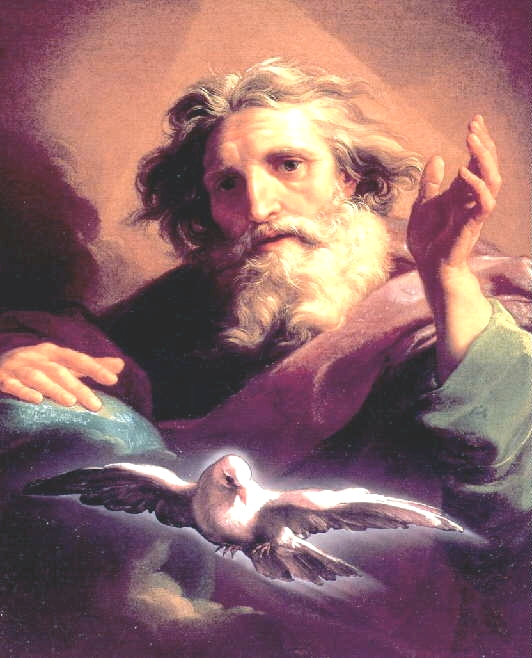
Pentecost

Although I am in the throes of qualifying exams the next two weeks, as a preacher and and an all around churchy kind of guy I try not to let my own schedule overwhelm the rhythms of the church year. Other than letting you know you can see my ethics exam essays over at The Writing of John Drury, I will keep my attention on this week's high festival: Pentecost.

On the fiftieth day after passover, and thus a few days after Christ's ascension, the Holy Spirit was poured out on a small gathering of Christ-followers in Jerusalem. Although the Spirit had done many might works before, this time the Spirit came to stay, establishing a new covenant with God's people. Jesus speaks of the Holy Spirit as the promised gift of the Father (Ac 1:4). The Holy Spirit is the promised gift of the Father. This is the promise spoken of in Isa 65, Jer 31, Joel 2, etc., where God says he will dwell in peace with his people. The Holy Spirit is the promised gift of the Father. The concrete content of this promised relation is participation in the sonship of Jesus Christ, for by the Spirit we are adopted as children of God the Father (cf. Gal 4:4-7). The Holy Spirit is the promised gift of the Father. The promised outpouring of this Spirit of adoption comes as a gift, and thus is not something we can control or earn or predict, but a gift which comes freely and graciously and surprisingly.

Since the Spirit comes as a gift, we cannot force or coerce the pentecostal outpouring necessary for the continued mission of the church in our time. But that does not necessarily mean we cannot prepare ourselves for when the Spirit comes. In view of the gift-character of the Spirit's coming at Pentecost, how can we best prepare ourselves?

First, we must wait. This is what Jesus commands his disciples to do (Ac 1:4). Waiting requires time. Waiting requires patience. Waiting requires attention. When we are waiting on God, we are not just passing time but keeping watch for him and his work.

Second, we must wait together. On the day of Pentecost, the disciples are gathered together in one place (Ac 2:1). Waiting for the outpouring of the Spirit is not primarily an individual endeavor, although it may be that as well. Waiting for the promised gift of the Father is the activity of the church, patiently opening itself up to what God will do through her. One need not find a community where the Spirit is "felt" or "seen," but one should at least find a community that waits together for the Spirit.

Finally, we must wait together poised for witness to the risen Christ. Before the Spirit came, the disciples knew what the Spirit was coming to do. It is not that the Spirit gives them the idea of being Christ's witnesses to the ends of the earth, but rather than the Spirit gives them the strength to be the witnesses Christ commanded them to be. The Father does not send the Spirit primarily for the purpose of displaying power or improving our lives, though he may very well do such things. The Father sends his Spirit to equip his people to bear witness to his Son whom he has raised from the dead. When the Spirit comes, we ought to be ready to bear witness to Christ. Thus we do not have to wait for signs and wonders to becoming acquainted with this Jesus by hearing his story. Perhaps we have previously overlooked the Spirit's outpouring because we were looking for something other than his primary work of equipping the church for witness to Christ.

So, the best way to prepare for the coming of the Spirit is to wait together poised.

Any thoughts?
What other implications can be drawn from the gift-character of the Spirit's coming?
What other aspects of our preparation could be added?
What other insights from the story of Pentecost to you have to share?
_

Thursday, May 17, 2007

Ascension Day: "This same Jesus will return in the same way as you saw him go" (Acts 1:11)

We've come to the close of our 40 day recollection of the time Jesus walked and talked and ate with his disciples after his resurrection from the dead. These 40 days come to their definitive close with the Ascension. The church calendar celebrates this on Ascension Day, which is today, Thursday the 17th of March. The subsequent Sunday may also serve as a day to remember our Lord's Ascension to heaven and his session to the right hand of the Father.

Last year on Ascension Day I posted a number of unintegrated theses on Christ's ascension. I still stand by most of those theses and would recommend taking a glance at them. Unfortunately, I have done little to develop or synthesize those ideas directly in conjunction with the ascension, although many of them have wiggled their way into my weekly reflections on the resurrection over the past 40 days since Easter. What I wish to add this time around is a pointed reflection on Luke's account of the ascension in the opening scene of the Book of Acts.

What I found particularly striking and still a bit confusing is a little word repeated twice in the last verse of this scene: Two men appear and say "Men of Galilee, why do you stand here looking into the sky? This same Jesus, who has been taken from you into heaven, will come back in the same way you have seen him go into heaven" (Acts 1:11). Why is it so important that it is this same Jesus who will return? Why is it so important that this same Jesus will return in the same way that we went? And why does the mention of this sameness of personal identity and mode of action imply that the disciples should stop standing there looking into the sky? I don't know if I have adequate answers to these questions, but here's a shot.

Why is it so important that it is this same Jesus who will return? As I have stated elsewhere, the ascension is closely tied to Jesus' return. So it fits that the disciples would receive a promise of his final return in glory immediately after his ascension. But the mention of "this same Jesus" adds an emphasis on the identity of the person who will return. The accent falls not on the return but on Jesus. The substance of our hope is not so much the return of Jesus but the return of Jesus. This is a helpful reminder to keep our attention on Jesus and not get too caught up in the details of his return or, worse yet, treat Jesus as a means to some other end like heavenly bliss. The promise of the second coming is the promise that the one and the same Jesus who was sent by the Father to dwell among us, die in our place, and be raised for us is the one who will come again. Now that's the kind of judge I want to face at the end of time!

Why is it so important that this same Jesus will return in the same way that we went? At the face of it, this second use of "same" should not be particularly interesting. I mean, there are angels speaking prophetically and so they being specific about what is going to happen someday. We thank the two guys dressed in white for the details and go on our way. But the repetitiveness of the word "same" (outos) as well as the redundancy of the description ("taken from you into heaven ... the way you have seen him go into heaven") indicate the possibility of a deeper significance. My initial guess is that the two men dressed in white are identifying the content of Christ's return: the final coming of the Kingdom of God. A few verses earlier, the disciples ask if now is the time for Jesus to restore the kingdom. Jesus says its none of their business and tells them that his spirit will come to empower them to bear witness to him throughout the world. With the question of the kingdom still lingering, the two men make it clear that when Jesus comes back, he will come back by the clouds opening up, which is apocalyptic code for the arrival of God and his kingdom. So, the same kind of return tells us that although the kingdom has not yet fully come, it certainly will come and it will be Jesus who brings it. By his ascension he is now poised to come again in glory.

Why does the mention of this sameness of personal identity and mode of action imply that the disciples should stop standing there looking into the sky? I suspect that an unrelenting emphasis on the constancy of Jesus' personal identity and the specification that Jesus' return will bring with it the kingdom of God should help to turn the disciples away from their dumbfounded looks into the sky. It is not our job to "wonder where he went" but rather to bear witness to who he is throughout the world and to prepare the world for the coming kingdom. Of course, I still wonder where the body went. But the scriptures clearly point me in another direction, so I'll try my best to heed it.

Any thoughts?
Why do you think Luke emphasizes the sameness of Jesus in his ascent and return?
What happens when we put the accent on the return instead of the One who is to return?
How can reflecting on Christ's ascension instill in us a passion for his kingdom?
_

Wednesday, May 09, 2007

What's So Great about the Great Commission? (Mt 28:16-20)

As we continue our series of posts inspired by the 40 days Jesus spent with his disciples after his resurrection from the dead, we cannot forget the so-called Great Commission.

Throughout the New Testament, there is a definite connection made between the resurrection of Jesus and the mission of the apostles into the world. This connection is put pithily in John 20: "As the Father has sent me, so I send you."

The connection comes to narrative expression in the final scene of Matthew's gospel. Here are a few thoughts on this passage. The first introduces the context in which the commission is spoken. The next three analyze the content of the commission.

Context: Community (v. 16-17). The Great Commission is not just one among the many teachings of Jesus. As we shall see, it is a bracket-command which concerns all his other commands: the disciples are instructed to instruct others concerning all of Jesus' instructions (v. 20). But already in these introductory verses we see something else which makes the great commission stand out: it is uniquely given after his resurrection (and prior to his ascension). And so the community gathered around Jesus is no longer only a following community, but also a worshiping community. "When they saw him, they worshiped him." Interestingly, the story notes that "some doubted." (Perhaps the story of Thomas at the close of John's gospel is a gloss on this one-liner). This goes to show that even among the worshiping community there can be doubts. The two are not mutually exclusive. Jesus does not wait for the cessation of doubt before sending his disciples. Perhaps being caught up in mission is the best medicine for doubt.

I. Basis: Authority (v. 18). It is crucial that the Great Commission is not reduced to the command found in v. 19, but takes into account the basis of the commission in Jesus' authority. The divine authority which is proper to him as God's eternal son is now delegated to him in his divine-human unity after his resurrection from the dead. Note the perfect tense: "has been given." This grounds the great commission in a definitive past event with ongoing significance. Note also the universal scope: "all authority in heaven and on earth." Jesus has been given authority over all places.

II. Command: Mission (v. 19-20a). The first word "therefore" should be an additional clue that v. 19 should not be cited in isolation. On the basis of Jesus' authority over all, he now sends the disciples to all. This move from basis in Christ to command for us is signaled by the imperative present tense: "go and make." Note again the universal scope: "all nations." The disciples are sent to all peoples. The command to go is not left empty, but is filled with specific content to characterize the practice of disciple-making: the nations are to be gathered by baptism and edified by teaching.

III. Promise: Presence (v. 20b). Just as the Great Commission loses ground without its basis in Christ's authority, it loses power without its promise of Christ's presence. The Great Commission is not the end of Jesus' ministry and the beginning of our ministry. Rather, the Great Commission is the continuation of Jesus' ministry in a different form: by the power of his Spirit, his disciples make new disciples, not of themselves, but of Jesus. Thus Jesus remains present with them as they fulfill his commission to them. This presence is not only a present reality as they stand before him on the mountain, but is also a future tense promise. This promise assures ("surely") them that they are not alone as they execute his mission. Note once again the universal scope: "always, to the very end of the age." The disciples are promised a perpetual presence of Christ for all times.

So, within the context of the worshiping community of the risen Christ, the Great Commission has its basis in Jesus' perfect authority over all places, issues a present command of mission to all peoples, and offers a future promise of presence for all times.

Any thoughts?
What happens when the command of the great commission is severed from its basis and promise?
What do you think makes the great commission great?
Do you have any further observations concerning the Great Commission?
_

Thursday, May 03, 2007

The Spirit of him who raised Jesus from the dead is living in you (Rom 8:11)

Sometimes you have no idea what resources are at your disposal.

When my brother and I were growing up we were involved in a alternative boy scout program at our church called CYC. There were pins and badges and sashes and everything. If you acquired all the badges over the course of six years, you received the highest award. As a sixth grader, my brother was the first merit this award at my local church. It was kind of a big deal.

After the award ceremony, our dad took my brother to the department store Hills and said, "Anything you want, I'll get it for you." My brother selected a tape case (this was the 80's) that could carry over 30 tapes. It was the coolest and biggest thing he could think of.

Many years later we were reminiscing about this story, when my dad revealed this unknown fact: that night he had eight crisp one hundred dollar bills in his pocket. He was ready to buy my brother a brand new bike or a high end stereo system. Of course, my brother was happy with his tape case. But he had no idea what resources were at his disposal.

In Romans 8, Paul speaks of the power of the Spirit by which we live lives of freedom from sin in Jesus Christ. But we rightfully have a little suspicion that all this talk of the Holy Spirit's power in the life of the Christian might simply be a motivating hypothetical or, worse yet, just wishful thinking. I mean, do we really see the Spirit overcoming the flesh in the way described? Does the Spirit really have this kind of power?

There is a lot to this problem and lot going on in this text. But I would like to highlight one particular aspect of the Spirit that may affect our attitude to this promised power. You see, Romans 8 is not only speaking in the general terms of a cosmic struggle between flesh and spirit (although that's an element in the passage). Romans 8 identifies this Spirit by a particular event in God's history with us. The Holy Spirit is not just any spirit, but the Spirit of him who raised Jesus from the dead (Rom 8:11). God raised Jesus by the power of his Spirit. The Father is the one who brings his Son back from the dead. The Son is the firstborn from the dead. The Spirit is the means by which the Father raises his Son. He is the tie that binds them together even in the face of death. He is their love which is stronger than death. He is God's resurrection power.

It is this Spirit that dwells within those who are in Christ. The Spirit by which the dead are raised lives in us! Perhaps his power is held at bay. Perhaps he is waiting for better time. Perhaps his work is hidden. But whatever we say, we must at least proclaim that the Spirit does not lack the power to overcome sin and death. For if there is anything we know about the Holy Spirit, it is his unprecedented power over the greatest of human enemies. Perhaps we have settled for less than what God has offered. Perhaps the time is now. Perhaps his resurrection power may be manifested even in this time between the times.

Sometimes you have no idea what resources are at your disposal.

Any thoughts?
Do you also see the interconnection between resurrection and the Spirit in Romans 8?
How else does this play out in the remainder of the chapter?
What does it look like for the Spirit of the resurrection to dwell in us?
How does the resurrection help to illumine the relationship between Christ and the Spirit?
_

Tuesday, April 24, 2007

You put him to death, but God raised him from the dead

As our Forty Day series on the Resurrection continues, I will need to apologize for moving quite beyond the narratives of that particular period. Although I find this period of time incredibly interesting, the focus of this series is on the significance of Christ's resurrection, not a particular stretch of time. The Forty Days when the risen Jesus walked and talked with his disciples is thus the occasion, not the subject-matter, of our series. Thus last week we jumped back to the raising of Lazarus. This week we will jump forward to the content of apostolic preaching in Acts.

The Book of Acts is full of sermons. This is part of what makes Acts notoriously difficult to preach through: it's hard to preach a sermon on a sermon. One is tempted to just read (or better yet memorize) Peter's dense yet convicting Pentecost sermon (Acts 2), Simon's retelling of the whole Old Testament before the Sanhedrin (Acts 7), or Paul's erudite engagement with the intellectuals on Mars Hill (Acts 17).

But instead of treating these as isolated sermons, one could also read them synoptically in order to identify common patterns of preaching in early Christianity as portrayed by Luke. One of the most striking parallels between the vast majority of these sermons is their shared climactic phrase: you/they put Jesus to death, but God raised him from the dead.

Here are a few examples:

"... you put him to death by nailing him to the cross. But God raised him from the dead ..." (Acts 2:23-24)

"You killed the author of life, but God raised him from the dead." (Acts 3:15)

"... Jesus Christ of Nazareth, whom you crucified but whom God raised from the dead ..." (Acts 4:10)

"The God of our fathers raised Jesus from the dead—whom you had killed by hanging him on a tree." (Acts 5:30)

"They killed him by hanging him on a tree, but God raised him from the dead on the third day..." (Acts 10:39-40)

"When they had carried out all that was written about him, they took him down from the tree and laid him in a tomb. But God raised him from the dead." (Acts 13:29-30)

As my italics indicate, the key word here is "but." This little words sets in contrast the false ending of Good Friday and points to the surprise ending of Easter Sunday. According to the sermons in Acts, the move from crucifixion to resurrection is a move from a human act to a divine act. It is a climactic reversal, a twist in the story. What we humans have done, God himself has undone. The tension is not released but heightened by the death of Jesus. The resolution of the story comes with God's resurrection of Jesus. The gospel story does not end with the sigh of the cross. The gospel story ends with God breathing life in the dead Jesus. Only after the story reaches its climax in the resurrection of Christ do the apostolic preachers offer a word of repentance, forgiveness and hope.

What implications does this "but" have for our preaching and teaching of the gospel?

(1) Beware of premature alleviation. Early apostolic preaching calls into question our practice of moving straight from talk of Christ's death to talk of repentance, forgiveness and hope. This kind of Easter-hopping is a bad habit. We certainly must not neglect the cross in favor of a shallow overcomer spirit. But such shallowness would not be the good news of Easter, for a resurrection story requires a death story. The surprise ending of the story of Jesus must not be forgotten.

(2) The importance of witnesses. As these sermons show, the resurrection is a discreet act of God in time. This act was witnessed by God's chosen apostles, who have passed this message to the world. The passing on of this witness is the continuing mission of the church. This means that the content of our message is not first and foremost what God is like, but what God has done. The center of our message is that God did such and such a thing at such and such a time and at such and such a place. We have heard about these events. We should never stop speaking about these events.

(3) Who's the boss? Why is the resurrection so significant? Why do the apostles move straight from "but God raised him from the dead" to "repent and be baptized"? Because by raising Jesus from the dead, God has put him in the position as judge over the whole world. We can no longer relegate God's authority to the Jews. Nor can we pretend to reckon with some general concept of God. We must reckon with the God of Israel through his Son Jesus Christ, for this particular God and this God alone has entered time to overcome the most universal problem of all: death. The one who has overcome death is thus the one we must face upon our death. He is seated at the right hand of the Father and will come again to judge the living and the dead. This is good news, because it will be one of us who will judge us. This is good news, because he has invited us to become his brothers and thereby become adopted sons and daughters of God. This is good news, because the one who will judge us is the one who prays for our forgiveness, including our murder of him.

Any thoughts?
Are there other interesting patterns you've observed in the sermons from Acts?
Am I right to emphasize the contrast within this climactic statement?
What other implications can be drawn from the emphasis on resurrection in these sermons?

Wednesday, April 18, 2007

"I am the Resurrection and the Life"

As some perceptive readers have certainly noticed, I have begun a series of posts on the resurrection. I decided that this year I am going to give as much attention to the 40 days of Easter as I usually do the 40 days of Lent. Actually, these 40 days have more direct biblical warrant, as Luke indicates that the risen Jesus spent 40 days with his disciples between his resurrection and ascension. These 40 days seem a ripe time to reflect on the significance of resurrection for Jesus, for the church, and for the world.

We began with the meaning of resurrection for Jesus -- the only place to start and the touchpoint to which we must return again and again. We then asked after the implications of Jesus' resurrection for our own future hope. This week I want to push these implications further, asking what Christ's resurrection means for us today. What are the present implications of Jesus' resurrection?

There is no better text to turn to in reflecting on this question than John 11.

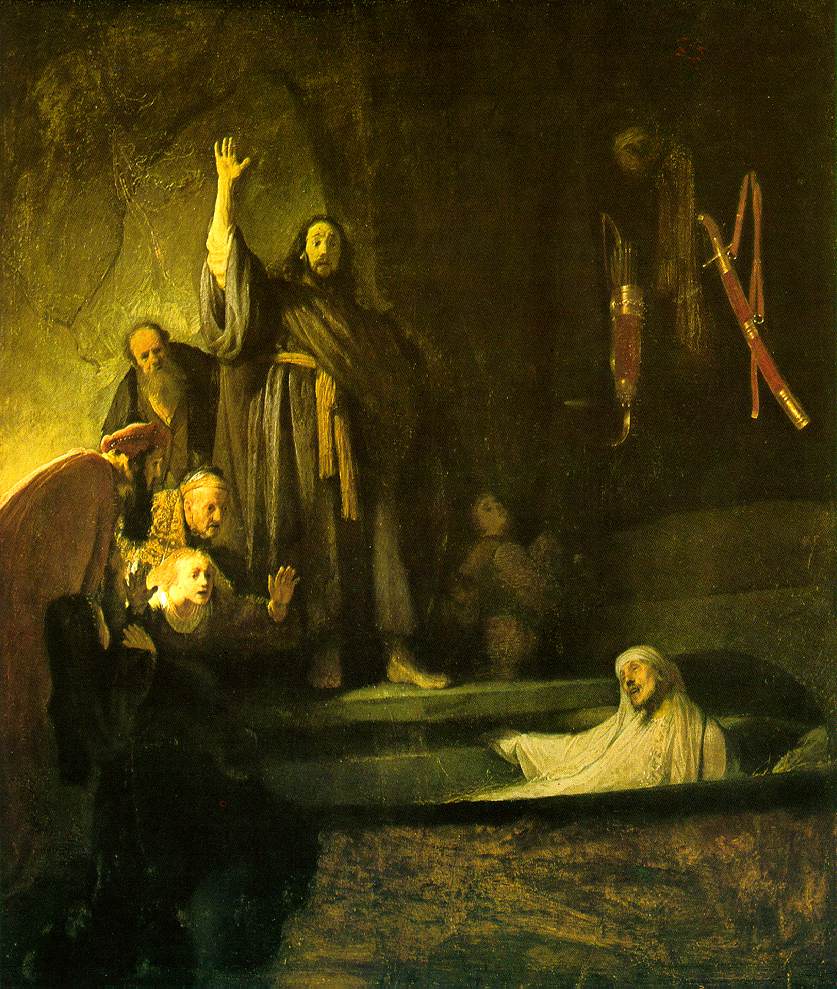
In John 11, we see Christ's resurrection power breaking in to the present existence of his disciple and friend Lazarus. And this in-breaking comes in explicit contrast to the expectations of Jesus' disciples and friends.

On one side, Thomas says that the disciples should go with Jesus to Bethany in order to die with him. He does not see this trip as one which brings life to the dead, but as one which brings death to the living. Yet Thomas nobly and loyally goes anyway. Jesus does not rebuke Thomas; but, as we shall see, his attitude is incomplete. Thomas is an instance of action without hope: he rightly is willing to die for Jesus, but he does not see the life Jesus gives. In his focus on the present, the future is blurred.

On another side, Martha is frustrated that Jesus withheld his healing power from Lazarus by coming four days late. She believes that Jesus has healing power (hence her frustrations). She even declares that she still believes despite this disappointing incident (v. 22). When Jesus offers the hope of resurrection, she quickly puts this hope in a distant last day. Jesus does not rebuke Martha; but, as we shall see, her attitude is incomplete. Martha is an instance of hope without action: she rightly puts her hope in the final resurrection, but she does not see that resurrection is also present reality. In her focus on the future, the present is blurred.

These contrasting expectations set in sharp relief Jesus' statement: "I am the resurrection and the life." Jesus does not narrow his focus only on present action. Nor does Jesus defer all hopes to some future end. In him present and future meet as he proclaims himself as the resurrection and the life. Resurrection is not only something that happens to Jesus; it is also his possession. Life and death are under his authority. And so matters of life and death need not follow a predetermined temporal pattern. They are his to give and take away. With Jesus, resurrection can break in. With Jesus, there is life to be partaken of even now.

The implication for our lives is that Jesus offers life not only after death but in the face of death. The resurrection of Jesus brings future hope -- that must not be set aside. But it also brings present power. There is an active life now that can be lived in light of the eternal life promised to us then. We must avoid the tendency to choose between these two, as we are often pressured to do. Resurrection life is a present tense property of the Risen One whom we serve. And so we are called to live full lives as a gift from him. We are called to support life wherever it is threatened in the name of the one who raised the dead. We are called to live with those who are dying as witnesses to the life of the one who died but rose again.

Any thoughts?
In what ways to we slip into a focus on the future without the present or vice versa?
Which tendency do you lean towards?
What other implications of Jesus' present tense possession of resurrection life might there be?
_

Monday, April 16, 2007

Vote Drulogion!

Travis started a Top Theology Blogs list at UnSpun. If you wanna give this blog some e-affirmation, check it out and vote drulogion! Also, you can find some quality blogs worth reading.

Wednesday, April 11, 2007

What are resurrected bodies like? (I Cor 15)

The resurrection of Jesus is not only good news for him but also good news for us. With the news of Jesus' resurrection from the dead comes the promise of our resurrection. This is not merely a vague hope for an afterlife. It is a future promise established on a past history: God raised Jesus from the dead as the first fruits of our resurrection. Trust is build up over time; in Jesus Christ, God has taken the time to build up trust in his resurrecting power. But since our hope rests on what happened to Jesus, talk of our future life after death cannot proceed by means of mere speculation. When it comes to resurrected bodies, we have something to go on: the risen body of Jesus.

So, based on what we know about the risen Jesus, what are resurrected bodies like?

Paul asks himself this question in I Corinthians 15. It was likely being asked by the Corinthians themselves. After making it clear that the truth of the gospel hangs on the resurrection of Jesus, Paul asks after the meaning of this claim. What does resurrection do to bodies?

It is in this context that Paul makes his famous claim that resurrected bodies on spiritual bodies. Resurrection is no mere continuation of natural embodiment. Flesh and blood cannot inherit the kingdom. The natural must put on or become spiritual. Resurrection is a spiritual reality. Jesus has been raised spiritually. We will be raised spiritually.

Does this mean that Paul rejects bodily resurrection?

I do not think so. Bodily resurrection and spiritual resurrection are not mutually exclusive. To treat them as such is to read Paul's comments here out of context, importing our own meaning of "spiritual" that contradicts the gist of the passage. There are three things I would like to point out that ought to prevent us from pitting spiritual resurrection against bodily resurrection.

(1) The Logic of First fruits. In this passage, Paul repeatedly states that the resurrection of Jesus is the first fruits of our resurrection. The logic of first fruits entails a strong similarity between Jesus' resurrection and ours. Since Jesus' resurrection takes place in time ("on the third day") and space ("from the grave"), we every reason to think that our resurrection will be temporal and spatial. Will our interaction with time and space be greatly altered? Yes. But will we still be embodied creatures? Yes. The logic of first fruits implies whatever "spiritual" means, it does not mean non-bodily.

(2) Use of Parallelism. When the meaning of a word is contested, it is a good idea to check for parallelism which may provide clues. Just such parallels appear in this passage. The contrast between natural and spiritual bodies does not hang isolated, but is accompanied by three other contrasts: perishable/imperishable (v. 42b), dishonor/glory (v. 43a), weakness/power (v. 43b). I suggest that whatever "spiritual" means in the passage, it primarily has to do with describing an imperishable, glorious and powerful body. Such adjectives imply a radical transformation of our bodies, but not necessarily the setting aside of bodily life.

(3) Putting the Spirit back in Spiritual. Lastly, I would suggest that the language of "spiritual" not be pre-determined by our understanding of "spirit" in contrast to "nature," but rather be linked definitively to the Holy Spirit (a.k.a., the third person of the trinity). As Paul says in numerous places, it is by his Spirit that God raised Jesus from the dead. The Spirit is linked to God's act of resurrection. Perhaps "spiritual" bodies are bodies whose life is no longer temporarily sustained by the cause-and-effect system of nature, but eternally sustained by the Holy Spirit who indwells them as God's very presence and power.

In light of these points, I would argue that the spiritual character of the resurrection does not set aside the body, but is a gift given to our bodies. Resurrection surpasses yet includes bodily life.

Any thoughts?
What can we really say about our future in Christ?
Do these points help clarify the sense of "spiritual" bodies?
What are the implications for present life in the body if our bodies will be raised?
_

Wednesday, April 04, 2007

He is Risen

Even in the relatively free-form worship of my local congregation, there's at least one liturgical habit we've picked up that I'll hear this Easter Sunday:

Call: He is risen.

Response: He is risen indeed!

He is risen. I love this phrase, not only because it is a biblically-based and ecumenically-received statement of praise, but also because it is loaded with theological meaning. Attention to the details of this simple statement can serve to unpack the meaning and significance of Easter. Let's attend to each word in this phrase to see what lessons we can learn and what mistakes we can avoid.

He is risen.

The first thing to note is who is risen: it is none other than Jesus Christ. He is risen, not someone else. The one who is found walking and talking with his disciples in Jerusalem is the one and the same Jesus who had walked and talked with them in his years of ministry in Galilee. Although he has undergone a radical transformation of his being, he is still one and the same Jesus Christ. There is continuity of identity even in the midst of the surprising discontinuity of resurrected flesh from ordinary flesh. This continuity of identity is emphasized in the New Testament Easter narratives. Jesus repeatedly offers signs that he is who he is. The implication for us is that Easter is first and foremost about Jesus before its about anyone else.

This emphasis on the identity of the risen one wards off the mistake of making resurrection about someone other than Jesus. For instance, we must be careful to not cheapen the meaning of resurrection by attributing it to any "rise" of faith, hope or love among human beings. This danger is especially present for preachers, who in our search for illustrations and analogies sometimes draw attention away from the risen Lord Jesus Christ. If not the rest of the year, at least on Easter we should be careful to remember that we are called to talk about Jesus.

By turning our attention to Jesus, we are reminded that the future hopes of humanity are now tied up with this one man. Christians don't believe in life after death; Christians believe in Christ, who has been risen from the dead and is Lord over death. Only by hoping in him may we hope for eternal life through him. Jesus is not just "the only way to heaven." Jesus is heaven. In him alone is found eternal life. And at Easter we do not proclaim resurrection in general but the resurrection of Jesus Christ.

He is risen.

A unique contribution of this liturgical phrase to theological discourse is its present tense verb. The equivalent biblical phrase is often found in the past tense: "he had risen." Now the past tense is definitive in this case: the resurrection of Christ is something that happened, an event in history, an event in the past. But the risen Christ is not trapped in the past! If so, that would undermine the significance of Easter. You see, Jesus was not raised from the dead only to die again. In his healing ministry, Jesus raised many to life who would later die. But the New Testament consistently proclaims that Jesus has been raised from the dead to never die again. And so he not only has risen, but he is risen. Thus the message of Easter contains the good news of the continuing presence of our Lord Jesus Christ.

This emphasis on the present tense is an important counter-weight to any fascination with proving the resurrection of Jesus. Whether or not the resurrection of Jesus can be or should be proved by historical reason is a discussion for another time. The question I want to raise concerns the rhetorical effect of such proofs. Could it be that the language of historical evidence tends to lock our attention on the past event and perhaps distract us from attending to the living Lord? I do not wish to prejudice the answer to this question, but merely to recommend careful consideration of potential unintended consequences in our mode of presenting the gospel.

An emphasis on the present tense, provided it is grounded in the singular identity of Jesus Christ, serves as a bridge to the "relevance" of the Easter message. If we treat Easter as a distant history that requires our hermeneutical and homiletical endeavors to bring it into the present, we have already undermined the Lordship of Christ made manifest at Easter. The relevance of Jesus is already established from his side, as he is the contemporary of each and the Lord of all. The question is our relevance to him. Is our identity wrapped up with his or not? That is the question. We must reckon with Jesus at Easter, because he is risen.

He is risen.

It is crucially importantly that the apostolic witnesses almost never say, "He is alive!" This, of course, would be an eminently true statement, and the word "life" plays an important role in the theology of the New Testament. But the consistent refrain is that Jesus is risen. What is the significance of this word choice? The language of "risen" Christ points back to the death of Christ: one is risen from something -- in this case, from the dead. Jesus Christ is risen as the crucified one. His death is not a mere ordeal through which he passed. Crucifixion is not a means to resurrection, or a stage along the way. No! The crucified one is risen. The humble one is exalted without leaving behind the marks of his humility. The Lamb is seated on the throne.

Jesus' resurrection from the dead is an important reminder to not use the triumph of Easter Sunday to obscure the significance of Good Friday. We might be tempted to think Jesus exchanged his cross for a crown, when in fact his crown of thorns was his coronation. On the cross Jesus Christ really did reconcile the world to God. On the cross Jesus Christ was lifted up. On the cross Jesus Christ finished his work. Does this make the resurrection an afterthought? Certainly not! For in the resurrection, Jesus Christ comes to us to bring the reconciliation achieved by his obedient life-unto-death into our lives. The reconciliation achieved in his death does not stay his private property but becomes his shared inheritance with us in his resurrection from the dead. This deep interconnection between crucifixion and resurrection must be kept in mind so that we avoid overemphasis in either direction.

Some preachers might complain that so many attend Easter services that are not involved in Good Friday services or some other cross-centered Holy Week event. Although this limited liturgical participation is a serious matter to be addressed, the fact is that the message of Easter contains within it the message of cross. He is risen, risen from the dead, risen from his death of the cross, which reconciles us to God. From this very particular and significant death, Jesus has been raised.

He is risen.

He is risen indeed.

Any thoughts?
_

Thursday, March 29, 2007

Probing the Problem Jesus Solves

As Holy Week creeps closer and closer, I've been thinking about our problems. Not generally observable problems (though those are on my mind), but the deep problem that Jesus deals with in his life, death and resurrection. What is wrong? What is at stake? What makes Jesus' work so important?

I don't want to focus so much on the bad news as much as I want to understand the good news of Jesus Christ which casts light on our problems. A particularly poignant passage in this regard is Romans 5:6-11. What is interesting here is that Paul make three parallel statements indicating what we were when Christ died for us. So, for a moment, I want to zero in on these three different aspects of our problem in order to come to a greater appreciation of Christ's work.

(1) When we were still powerless ... [v. 6]

First of all, we are powerless. We are weak. We lack the power to overcome the death and disease and trials of life. We have fallen short. We are deprived of the best of life. Nobody's perfect. The language of powerlessness reminds us that we need help. We are weak, but God is strong. Lent and Holy Week is as good a time as any to contemplate our weakness in light of God's strength.

This is all true, but our weakness is not the whole story. If our problem is only that we are weak, then Jesus need only help us out, give us a hand. As Paul's language shows, there is more to our problem than our weakness.

(2) While we were still sinners ... [v. 8]

We are not only weak, but we are sinners. We are unrighteous. We are not right. We have broken God's law and so have broken God's heart. Not only are we not perfect, having fallen short; we are also sinners, people who have turned away from God and endangered our relationship with him. The language of sin is important to bring out our culpability in our problem. We are not just faulty; we are lawbreakers. Lent and Holy Week is as good a time as any to contemplate how we have sinned in light of God's righteousness.

This talk of sin certainly deepens our understanding of our problem beyond that of mere weakness. But even the language of unrighteousness is not the whole story. If our problem is reduced to sin, then God need only forgive. God in his everlasting faithfulness can uphold our relationship with him. But, once again, Paul's language reveals that there is even more to our problem than unrighteousness.

(3) When we were God's enemies ... [v. 10]

We are not only weak. We are not only sinners. We are God's enemies. We have not only damaged our relationship with God by breaking his law. We have twisted our relationship into one of enmity. We have not only turned away from God; we have turned against God. We are not just slipping into unintentional sin, or falling short because our of weakness. We are in a state of rebellion. We do not want to live in obedient communion with God. We want to follow our own way. And so we need radical reconciliation, which has been achieved in Jesus Christ. Lent and Holy Week is as good a time as any to contemplate how we have rebelled against God and made ourselves into enemies.

Of course, even the talk of enmity alone would not do. It is the most extreme of the three terms and therefore a helpful corrective to our excuses. But because it is so extreme, it needs to be clarified by the first two terms. We are not enemies of God because God hates us and God is a mean-spirited tyrant. No, the problem is not with God but with us. We have set ourselves up as enemies by our willful disobedience. Our unrighteousness is the content of our enmity. Our powerlessness in the face of death breaks us off from eternal communion with God.

... Christ died for us.

Of course, all this talk of our problems is not an end in itself. In each case, Paul brings up our problem in order to draw attention to the solution. When we were powerless, Christ died for the ungodly. While we were still sinners, Christ died for us. When we were God's enemies, we were reconciled to him through the death of his Son. So, even as we probe our problem, we are drawn to celebrate the solution won in Jesus Christ.

Any thoughts?
Do these three terms help to enrich our account of the human problem?
What aspects are not accounted for by these three terms?
Do we tend to focus on one of these to the exclusion of the others?
Is it appropriate to contemplate our problem in order to appreciate the solution all the more? Is there another way?
_